
Last updated November 2, 2026
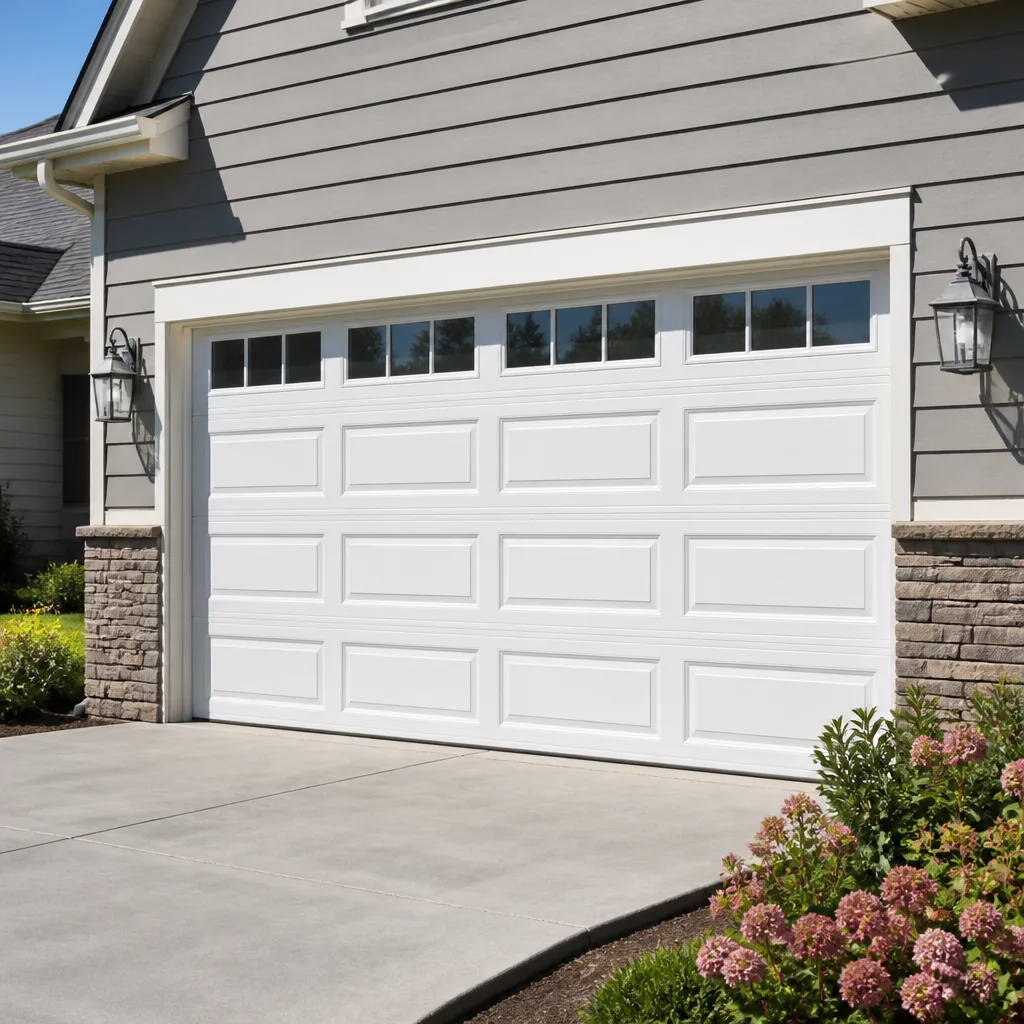 Raised-panel steel
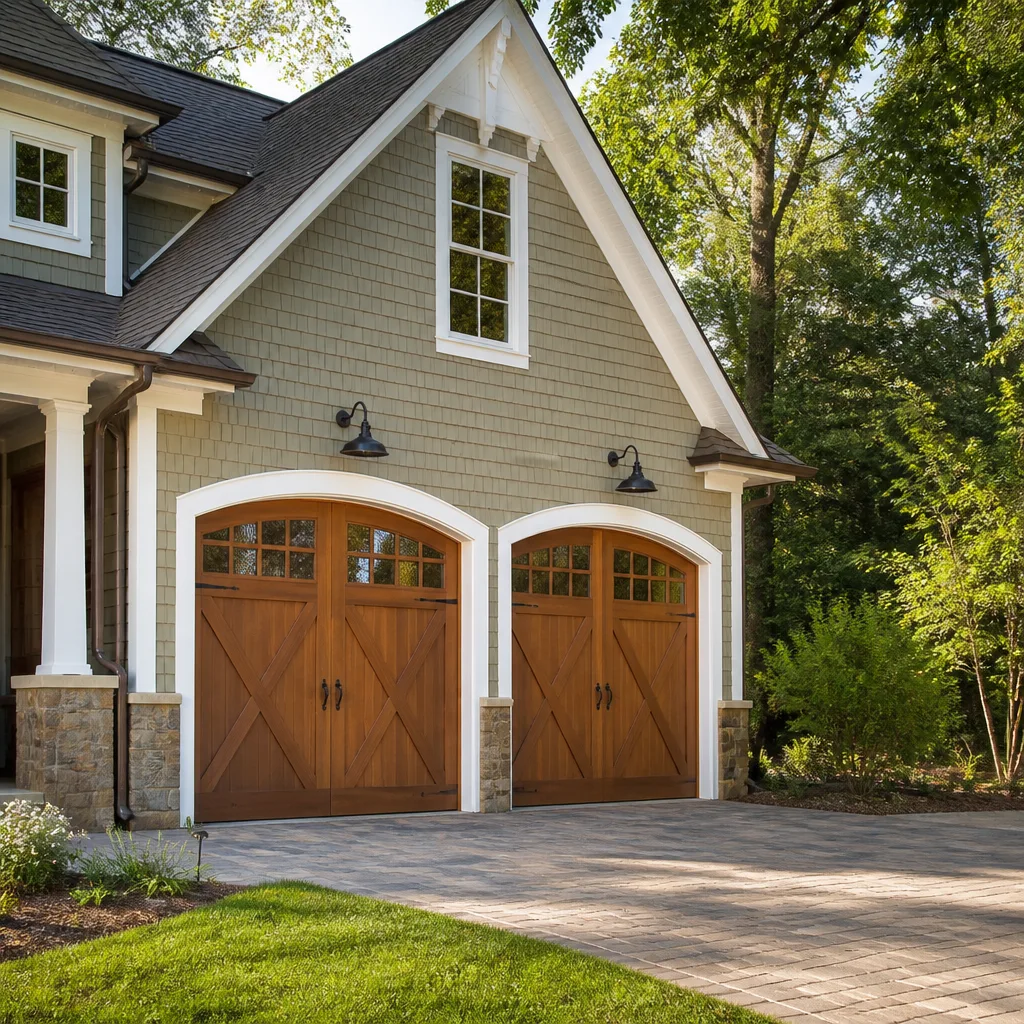 Carriage house
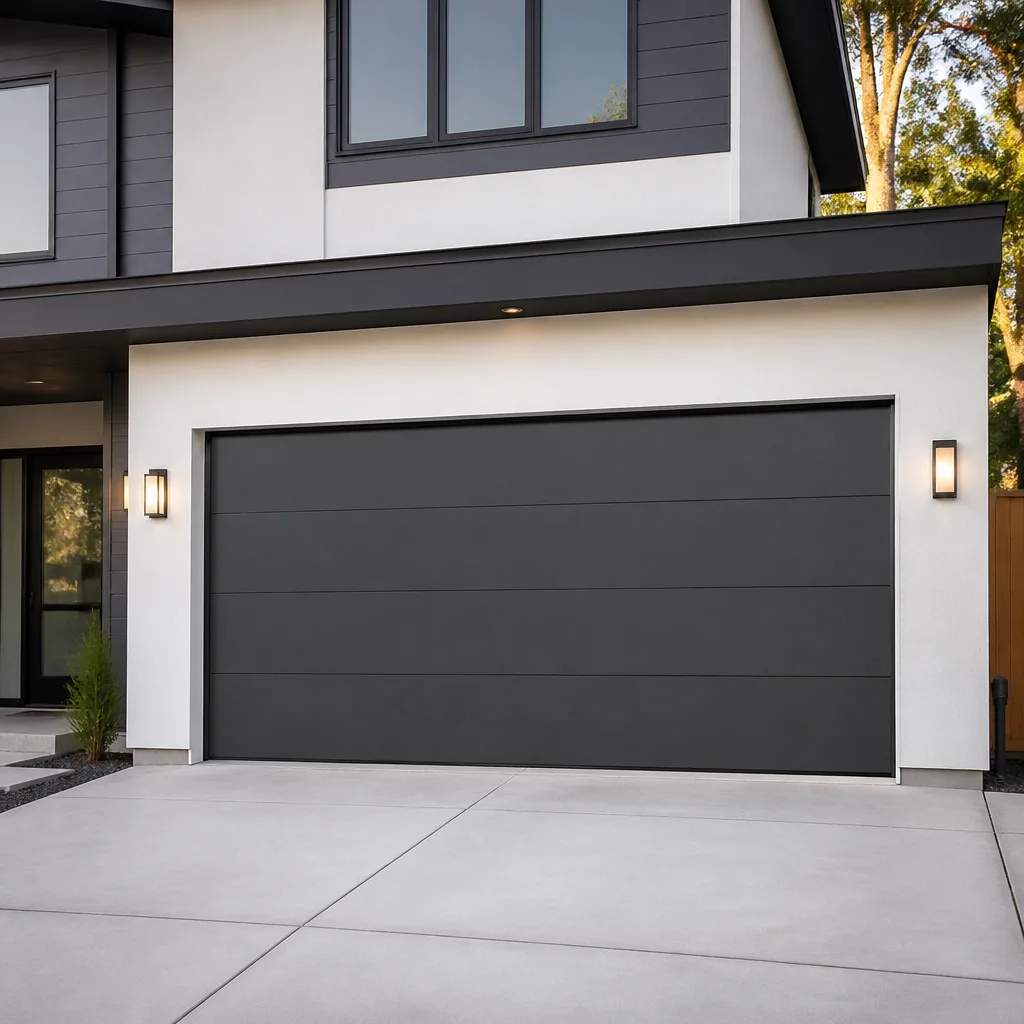 Modern flush
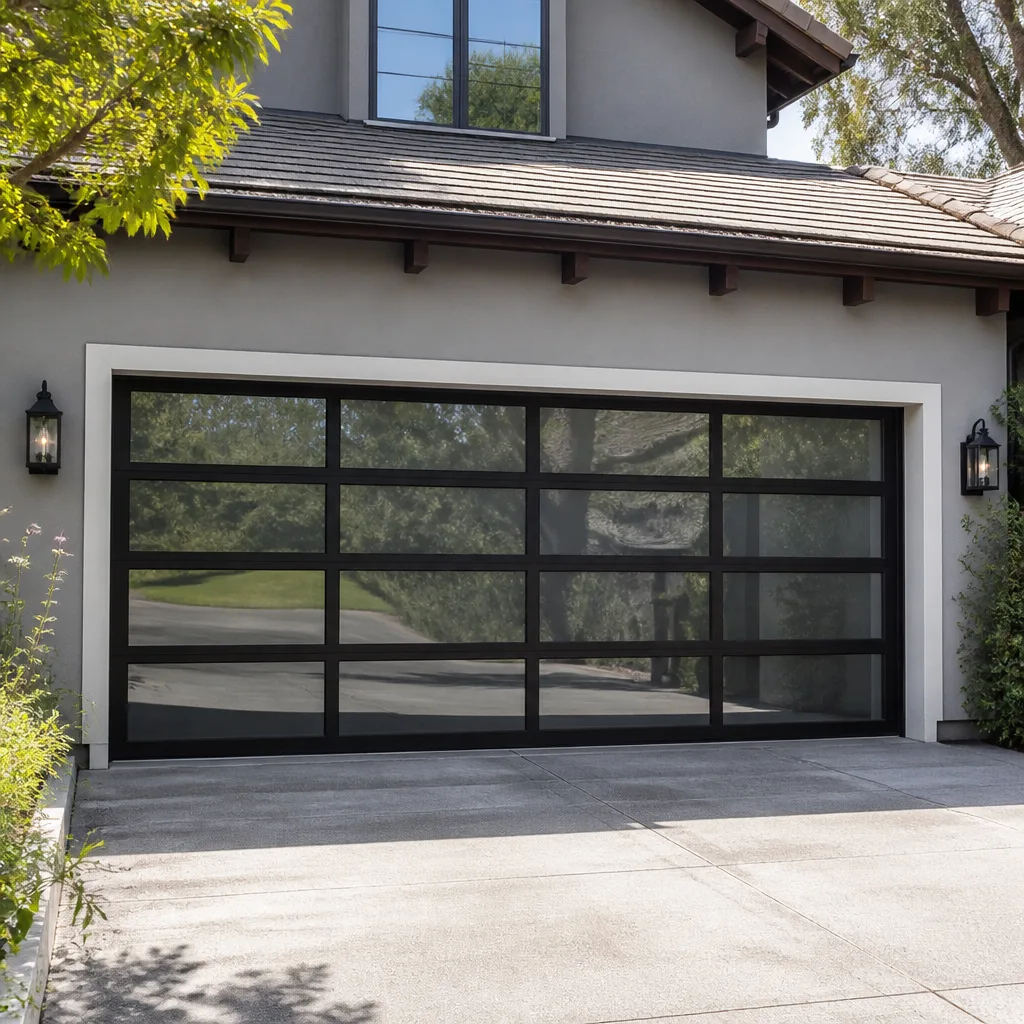 Full-view glass
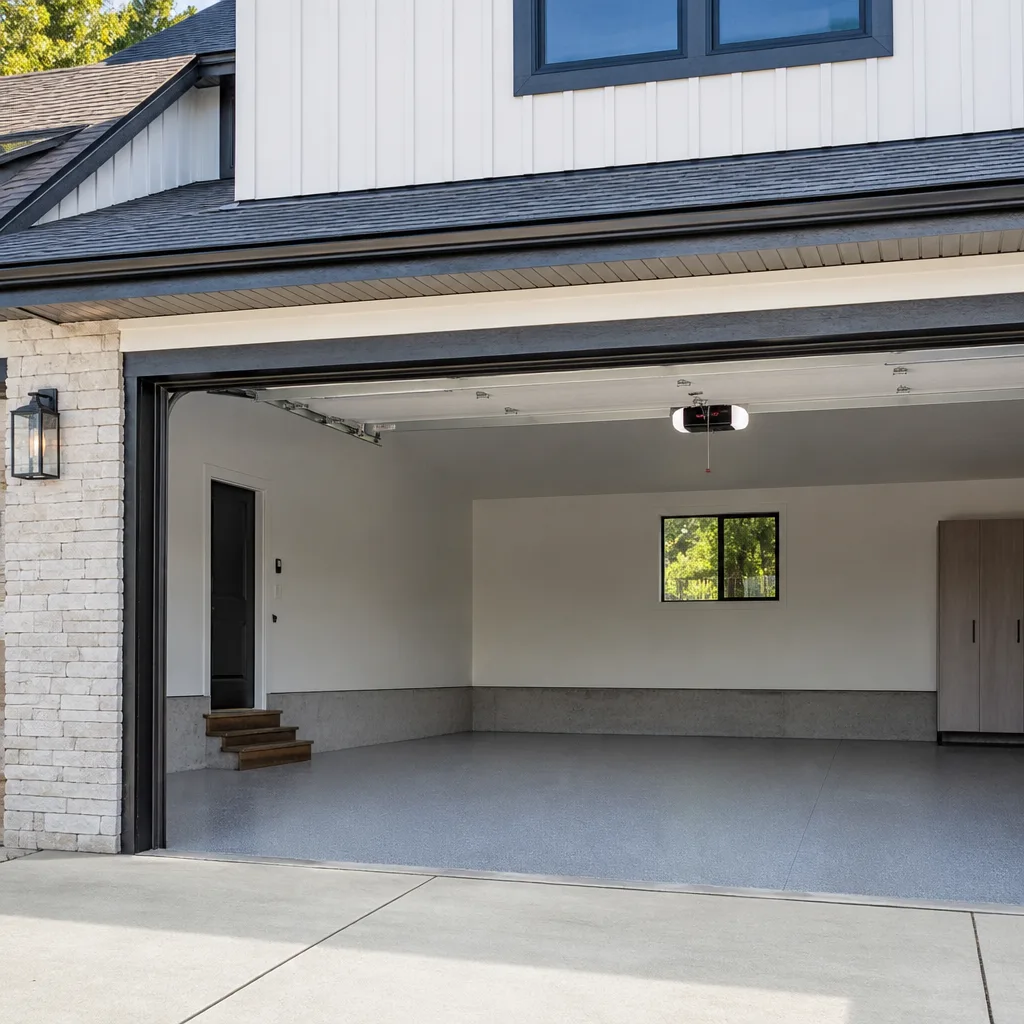 LiftMaster openers
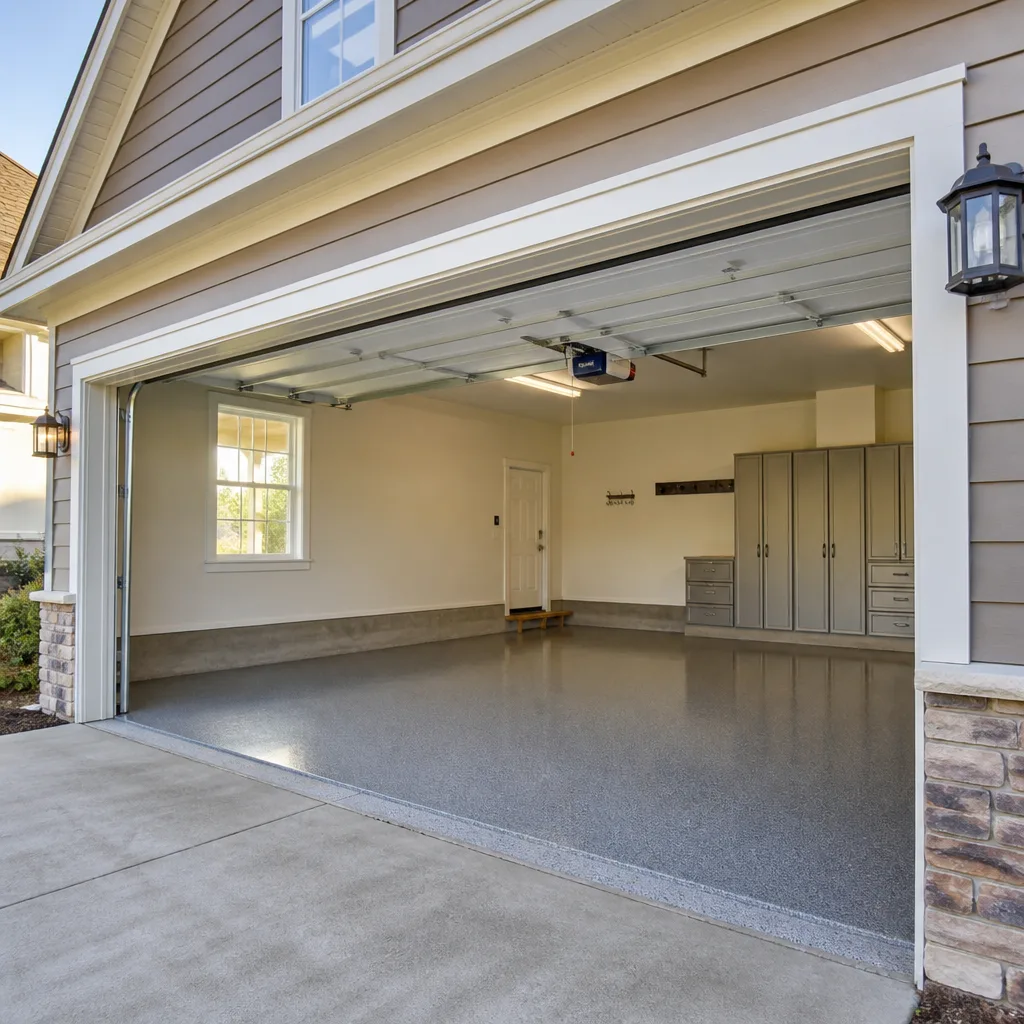 Chamberlain openers
Full 25-point door and opener safety check with every visit - springs, cables, rollers, tracks, and your LiftMaster or Chamberlain opener included
You get a price before we start. It does not change when the truck arrives.
Get your free estimateGarage Door Emergency Preparedness Guide for Sunnyvale Homes
During a power outage, 40% of homeowners with electric openers don’t know how to manually release their door. That’s a 10-second procedure that becomes a crisis when it needs to happen in the dark with a car on the other side and a family waiting to evacuate. In Sunnyvale, where earthquake kits and go-bags are standard household planning, the garage door is almost never part of the equation. This guide changes that. You’ll learn the manual release steps for the four most common opener brands installed in Sunnyvale homes, how to assess your door after a seismic event, what battery backup actually covers, and which information to record now so you’re not scrambling later.
Styles & brands we work with
- Raised-panel steel
- Carriage house
- Modern flush
- Full-view glass
- LiftMaster openers
- Chamberlain openers
Quick Answer
A solid Garage Door Repair Maintenance Checklist for Sunnyvale Homeowners covers emergency preparedness, which means three things: knowing how to manually release your opener during a power outage, understanding how earthquakes can rack your door out of alignment, and having your door’s specs and a trusted contractor’s number recorded before you need them. The manual release takes under a minute and works on every major brand, but the location of the release mechanism varies by opener model. After any significant seismic activity in Sunnyvale, check your door’s track alignment and balance before operating it electrically.
Table of Contents
- The Manual Release: How to Open Your Door When the Power’s Out
- Battery Backup in Sunnyvale: What’s Built In, What’s Not, and What Has Neither
- Earthquake Preparedness for Sunnyvale Garage Doors
- Post-Earthquake Door Assessment: What to Check Before You Operate
- Document This Now: The Emergency Information You’ll Wish You Had
- How to Secure a Door That Won’t Close After an Emergency
- Common Mistakes to Avoid
- When to Call a Professional
- Frequently Asked Questions
- The Bottom Line
The Manual Release: How to Open Your Door When the Power’s Out
Every automatic garage door opener installed in Sunnyvale has a manual release mechanism. It’s a red cord, usually with a T-shaped or triangular handle, hanging from a trolley on the opener rail. Pulling it disconnects the door from the motorized drive, letting you lift the door by hand. The cord is always there, always red, always within reach from inside the garage. And yet, in our experience, roughly half of Sunnyvale homeowners we visit have never used it.
The procedure itself is straightforward: pull the cord down and toward the garage interior, which releases the trolley from the chain or belt drive. Then lift the door manually using its handles or the bottom rail. If the door is properly balanced, it should lift smoothly with one hand and stay open on its own. If it’s heavy, difficult to lift, or slams when you try to close it, the springs have lost tension, and that’s a repair issue, not an emergency procedure issue.
Where people get tripped up is the variation between brands. Here’s what we see on the four most common openers in Sunnyvale:
LiftMaster and Chamberlain
Both brands use a nearly identical release mechanism. The red cord hangs from a trolley that rides on a rail above the door. Pull straight down, then toward the door opening. The one variation that confuses people: after pulling, the trolley stays disconnected. To re-engage, press the wall button or remote once while the door is fully closed, and the trolley will travel forward and re-lock itself. Many homeowners pull the cord again, which just re-disconnects it.
Genie
Genie openers, especially older screw-drive and chain-glide models commonly installed in Sunnyvale homes built in the 1980s and 1990s, use a red cord connected to a carriage with a release lever. Pull the cord down and back, toward the opener motor, and the carriage separates from the screw or chain. The re-engagement on Genie models is also automatic when the opener runs, but some older units require you to firmly pull the cord a second time while the door is in the closed position. If the cord feels stuck, don’t force it; check if the opener has a sliding lock latch that needs to be pushed first.
Craftsman
Craftsman openers from the 2000s and 2010s, which are common in Sunnyvale’s mid-century and ranch-style neighborhoods, follow the same red-cord convention. The one variation that trips people up: on some Craftsman models, the release handle is not a T-shape but a flat triangular plastic grip. It works identically, but the handle shape makes people second-guess whether they’re pulling the right thing. Pull it down with steady pressure, not a sharp jerk, and the trolley will release.
Practice this once before you need it. Do it during daylight, with the door closed, and confirm you can lift the door manually. Then run the opener once to re-engage. That 60-second drill is the difference between a routine outage and an emergency.
Battery Backup in Sunnyvale: What’s Built In, What’s Not, and What Has Neither
Battery backup for garage door openers is not universal. Understanding what your specific opener has, or doesn’t have, is core to Sunnyvale emergency planning. Some modern openers include integrated battery backup, some accept an add-on battery unit, and a large portion of older openers installed across Sunnyvale homes have no backup capability at all.
Here’s the breakdown:
- Built-in battery backup: Select LiftMaster and Chamberlain models, typically from the Premium series lines, include a battery inside the motor housing. These run the opener for a limited number of cycles during an outage, usually between 20 and 50 cycles depending on the model and the weight of the door.
- Add-on battery backup: Many LiftMaster and Chamberlain openers have a dedicated port for a bolt-on battery unit that mounts beside the motor. If your opener has a rectangular port or a blank cover plate on the side, it likely supports one. Genie offers a similar add-on for some models.
- No backup option: Most Craftsman openers from before 2015, many Genie screw-drive units, and virtually all openers installed before the late 2000s have no battery backup pathway. If the power goes out, the manual release cord is your only option.
Sunnyvale’s outage profile matters here. The city sees occasional PG&E power shutoffs during high wind and wildfire season, plus earthquake-related outages that can last days, not hours. A battery backup that handles 30 cycles sounds adequate until you’re using the garage as the primary entry and exit point for a family of four during a three-day outage. Then it’s gone by day two. In our experience working on doors across Sunnyvale, homeowners consistently overestimate what their battery backup will actually do in a prolonged outage. A backup battery is a convenience for short outages; the manual release cord is the plan for everything else.
If you’re not sure what your opener has, check the motor housing for a battery indicator light or a removable cover. If you’re still uncertain, note the opener’s model number, usually on a sticker on the side of the motor unit, and keep it with the emergency documents we outline below.
For those considering an opener upgrade specifically for emergency readiness, Garage Door Opener Repair in Sunnyvale covers the range of current options, including wall-mount and smart systems. But the repair-first truth is this: a manual release procedure you know well works on every opener, whether or not it has a battery.
Earthquake Preparedness for Sunnyvale Garage Doors
Sunnyvale sits in a high seismic hazard zone, with the Hayward Fault roughly 10 miles east and the San Andreas Fault about 15 miles west. While most homeowners’ earthquake planning focuses on furniture anchoring, gas shutoff valves, and water supplies, the garage door is a structural element that takes direct seismic stress. The door itself, often the largest moving object in the house, is connected to the home’s frame through tracks, hinges, springs, and the opener rail. When the ground moves, all of those connections move too.
The most common earthquake failure we see in Sunnyvale is a racked door: the foundation shifts, the garage opening goes slightly out of square, and the door, which was perfectly aligned before, now binds against the track on one side. This isn’t a cosmetic issue. A door that’s out of square by even half an inch can jam mid-travel, strip the gears in the opener, or damage the track mounting brackets. In the worst cases, the door can come off its track entirely when the opener tries to force it through a newly misaligned opening.
There are proactive steps worth taking before an earthquake:
- Check the track mounting: The vertical and horizontal tracks are bolted to the wall and ceiling. Loose lag bolts allow the track to flex during seismic shaking, which increases the chance of derailment. Tighten any loose bolts with a socket wrench. If a bolt spins without tightening, the wood behind it may be stripped, and that’s a professional fix.
- Verify the balance: Disconnect the opener using the manual release and lift the door halfway. A properly balanced door stays put. If it drops or rises, the springs need adjustment. An unbalanced door puts more strain on the opener during normal use and is more likely to derail during shaking.
- Inspect the rollers and hinges: Worn rollers with flattened or cracked wheels don’t track as smoothly and are more prone to jumping the track under lateral motion. If your door has steel rollers with no ball bearings, consider upgrading to nylon rollers. This is a low-cost preventative improvement.
- Check the opener’s J-arm attachment: The curved arm connecting the door to the opener trolley should be attached with a straight bracket that runs vertically on the door’s top section. If it’s attached only to the top edge, it’s a weaker configuration and can tear out during an earthquake.
For homes in Sunnyvale with older wood-frame garages, we see a specific pattern: the header above the opening sags over decades, and the track was adjusted to compensate. That means the margin for error during an earthquake is already reduced. If your garage was built before 1980 and the door has never been professionally assessed for alignment or checked against Garage Door Permits, Codes & Inspections in CA: What You Need to Know, an earthquake is the event that reveals the accumulated drift.
Post-Earthquake Door Assessment: What to Check Before You Operate
After a seismic event in Sunnyvale, your instinct will be to open the garage door and check on things. Before you hit the opener button, do a 60-second visual assessment. A door that was racked during the quake can be driven further off its track by the opener, turning a $200 repair into a full track replacement and a door off its hinges.
Here’s the post-earthquake checklist we use:
- Check the gap around the closed door from inside: Look at the vertical gap where the door meets the track on both sides. If one side has a visibly wider or narrower gap than the other, the opening may have shifted. Don’t operate the door electrically.
- Look at the track alignment: The vertical tracks should be straight and parallel to the door edges. If a track bows outward, has pulled away from the wall, or looks twisted, that’s structural movement translating directly into the door system.
- Inspect the spring shaft and cables: On a torsion spring system, the cables running down both sides should be taut and seated in the drums. A loose or slack cable means the spring system may have shifted. Do not attempt to open the door manually if a cable is off its drum; the door can drop unexpectedly.
- Test the manual release before the opener: Pull the red cord to disconnect the door, then try lifting it by hand. If it binds at any point, stop. Feel where it’s binding, note the height, and leave the door in place.
- If it passes all checks, run the opener once with you standing inside, watching the top of the track: If you see the track flex, hear grinding, or see the door hesitate, stop immediately and call for a professional assessment.
This is a case where the safe move is to assume the door is compromised until you’ve verified otherwise. In the aftermath of the 1989 Loma Prieta earthquake, we saw garage doors across the South Bay that looked fine at a glance but were binding at specific points in their travel. The homeowners only discovered the problem when the opener stripped its gears trying to push through the bind. A 60-second visual inspection would have caught it.
Document This Now: The Emergency Information You’ll Wish You Had
The one emergency prep step almost no Sunnyvale homeowner takes, and the one that saves the most time and money when something does go wrong, is documentation. When your door fails during an outage or after a quake, you’ll be on the phone with a contractor trying to describe your system from memory. The more accurate the information you can provide, the more likely the first visit resolves the problem.
Record these items and store them where you keep your other emergency documents:
- Opener brand and model number: Located on a sticker on the side of the motor housing. The model number is usually a series of letters and numbers, like “LiftMaster 8550W” or “Chamberlain B550.” This tells the technician what drive system, logic board, and compatibility your opener has before they arrive.
- Door brand and approximate age: Clopay, Amarr, and Wayne Dalton doors have brand markings on the interior side of the bottom section or on a sticker near the top of the door. The age matters because spring life is 10,000 to 20,000 cycles, and a 15-year-old door in Sunnyvale is usually near the end of its first or second spring lifespan.
- Spring type and size: For torsion springs, the wire size and inside diameter are painted on the end of the spring. A technician who knows they’re working with, say, a pair of .225 wire, 2-inch inside diameter springs can come prepared with the right parts. Extension springs have color-coded ends that indicate their weight rating.
- Serial number: Opener serial numbers help identify warranty status and any manufacturer recalls.
- Your contractor’s phone number: Write down the number of the garage door company you’ve used or would use. During a regional emergency, you don’t want to be researching contractors on a phone with 8% battery. Garage Door Repair in Sunnyvale is available at (877) 358-3130.
Take five minutes to gather this information in one place. A simple note in your phone or a piece of paper taped inside a cabinet near the garage door is all it takes. When you’re standing in a dark garage at 6 a.m. with a door that won’t move and a car trapped inside, you won’t be in the mood for a scavenger hunt.
How to Secure a Door That Won’t Close After an Emergency
There’s a scenario that comes up in Sunnyvale after power outages, and less commonly after earthquakes: the door is open and won’t close. Maybe the springs failed while the door was up, maybe the opener disconnected and the door is too heavy to guide down by hand, or maybe the track was knocked out of alignment. Whatever the cause, you’ve got an open garage exposing your home, your tools, your stored belongings, and potentially an interior access door.
The goal is to secure the opening without tools, without forcing the door, and without putting yourself under a door that could drop. Here’s how:
- Don’t try to force the door down. A door with a broken spring can weigh 150 to 400 pounds, and if it slips from your grip, it can come down with enough force to cause serious injury or death. If the door resists moving, stop. It’s not worth it. Leave the door in whatever position it’s in.
- Lock the interior door if you have one. The door between the garage and the house needs to be locked. This is the most important immediate step. Even if the garage itself is open, a locked interior door protects the house.
- Remove valuables from the garage. Bikes, tools, electronics, anything portable. If the garage is going to be open overnight, move what you can inside the house or into a car parked elsewhere.
- Block the opening if necessary. For an attached garage with no lockable interior door, or a detached garage, you can use your car parked nose-in to partially block the opening. This isn’t a security solution, but it reduces easy access.
- If the door is partially open and stable, leave it. A half-open door that’s resting on its track is not ideal, but it’s safer than trying to move it. A door that’s truly stuck is not going to suddenly fall unless the cables or springs are actively failing. Call for service and describe exactly where it’s stuck.
The good news on timing: Commodore Garage Door Repair home service covers the full system, door and opener, so one call handles whatever failed. If your door is stuck open and the springs have let go, that’s a repair we can typically complete with parts on the truck. If the track has pulled away from the wall, we can assess whether it’s a re-secure or a track replacement.
Common Mistakes to Avoid
- Never practicing the manual release before an emergency: The first time you pull the red cord should not be at 10 p.m. with no power and a car blocking you in. Practice once in daylight, with the door closed, and feel how much force the door takes to lift manually. If it’s harder than you expect, you’ll learn that now instead of during an outage, and a balanced door should lift easily.
- Assuming every opener has battery backup: Many homeowners in Sunnyvale, especially those in homes built before 2010, have openers with no battery backup at all. Check your specific model. An opener that runs on wall power only is completely dead during an outage, and the manual release is your only option.
- Running the opener after an earthquake without checking the track first: A 60-second visual check catches most post-seismic problems before the opener turns a binding door into a derailed one. Skip the check, and you risk stripping gears, bending panels, or pulling the track off the wall entirely.
- Trying to force a stuck door down manually: A garage door with a broken spring is dangerously heavy. If the door won’t move smoothly when you guide it, let go. A stuck door is better than a door that comes down on you or someone in your household.
- Not recording the door and opener specifications: When you need service, the technician’s first questions are about brand, model, and spring type. Having this documented means a quicker diagnosis, the right parts on the first truck, and no guesswork under pressure. Five minutes of documentation saves hours of delay.
- Storing the only manual release information in a file you can’t access during an outage: If your emergency binder is in a cloud drive that requires power and Wi-Fi, it’s useless when the power is out. Keep a printed or written note with the manual release steps and your contractor’s number somewhere accessible without electricity.
- Ignoring balance issues until they become emergencies: A door that’s been drifting shut or feels heavy for months is a spring on its way out. In Sunnyvale, where doors cycle multiple times daily for commuters, spring failure is a wear item, not a fluke. Address it during normal times and it won’t be an emergency later.
When to Call a Professional
Some emergency situations are safe to manage on your own: pulling the manual release during an outage, doing a post-earthquake visual check, locking the interior door. Others require a technician. Call a professional if your springs have broken while the door was open, leaving the door stuck in the raised position. Call if the door has come off its track, or if the track has pulled away from the wall, or if the cables are hanging loose. Call if you’ve completed the post-earthquake assessment and the door binds or grinds during operation. Call if the door is too heavy to lift manually, which signals a spring problem, not a technique problem. High-tension springs and cables are genuinely dangerous to work on. They store hundreds of pounds of force, and an improper release can cause serious injury. Commodore Garage Door Repair offers free estimates in Sunnyvale, call (877) 358-3130.
Frequently Asked Questions
Pull the red emergency release cord hanging from the opener rail, which disconnects the door from the motorized drive, then lift the door by hand using its handles or bottom rail. The release cord is present on all major opener brands including LiftMaster, Chamberlain, Genie, and Craftsman. If the door feels heavy or won’t lift smoothly, the springs may have failed, and you should call (877) 358-3130 rather than forcing it.
Only some openers do. Select LiftMaster and Chamberlain models have built-in batteries, while many others accept an add-on battery unit, and most Genie and Craftsman openers installed before 2015 have no backup option at all. Check your opener’s motor housing for a battery compartment or indicator light, and practice the manual release regardless of what you find.
Check the gap between the door and the track on both sides, look for bowed or twisted track sections, inspect the cables for slack or derailment, and test the door manually using the release cord before running the opener. If anything looks shifted, binds during manual operation, or the door hesitates when the opener runs, leave it alone and call for a professional assessment.
Spring replacement in Sunnyvale typically runs $180 to $340 for a single spring depending on the spring’s wire size and the door’s weight, while track realignment and re-securing generally falls between $150 and $300. A full opener replacement with basic installation can run $350 to $600. The price is quoted and agreed before any work starts, so you’ll know the number up front. Call (877) 358-3130 for an exact quote; estimates are free.
Yes. We work on what you already have, and Clopay, Amarr, and Wayne Dalton doors are systems we know well. Rather than pushing a replacement, we diagnose the specific failure on your existing door and repair it. If a door truly needs replacement, Garage Door Installation in Sunnyvale is available, but repair is always the first recommendation when it’s the right call.
We prioritize emergencies, and we work to get a technician to your Sunnyvale home as quickly as possible, typically same-day for urgent calls. If your car is trapped in the garage or your door is stuck open, tell us when you call, and we’ll treat it as the priority it is. Call (877) 358-3130 and describe what’s happening; we’ll tell you exactly what to expect.
The Bottom Line
Sunnyvale homeowners prepare for earthquakes and power outages, but the garage door is the piece that usually gets forgotten until it’s the thing blocking the car in or leaving the house open. Knowing your manual release, understanding your opener’s battery backup situation, and doing a 60-second post-earthquake check are the three highest-leverage steps you can take. Add in recording your door and opener specifications now, including brand, model, and spring type, and you’ve already done more than most of your neighbors. For more guides & resources on keeping your door reliable, explore our blog. When an emergency does hit and the door won’t cooperate, one call covers the door and the opener: Commodore Garage Door Repair at (877) 358-3130. Free estimates, straight diagnosis, and no upsell pressure.
Written by the team at Commodore Garage Door Repair, serving Sunnyvale since 2015.
See the difference
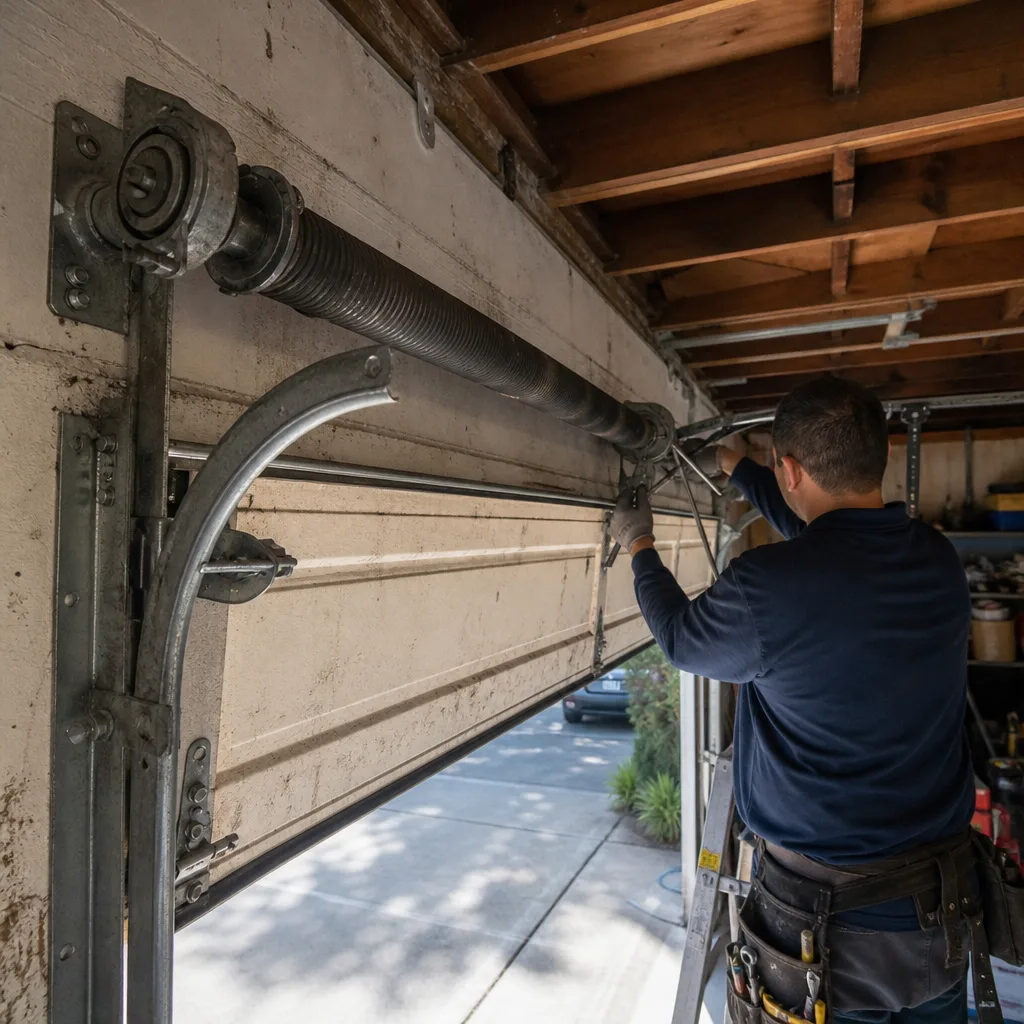 Before
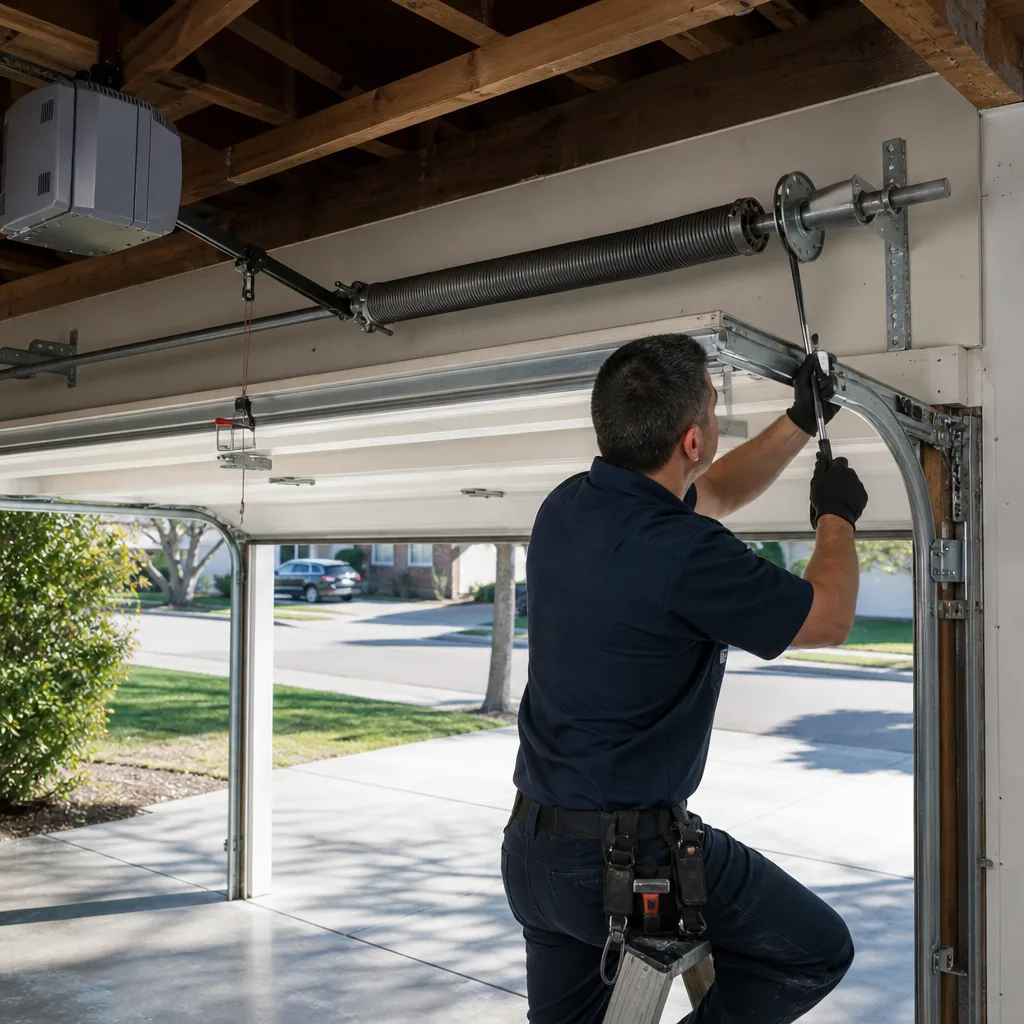 After
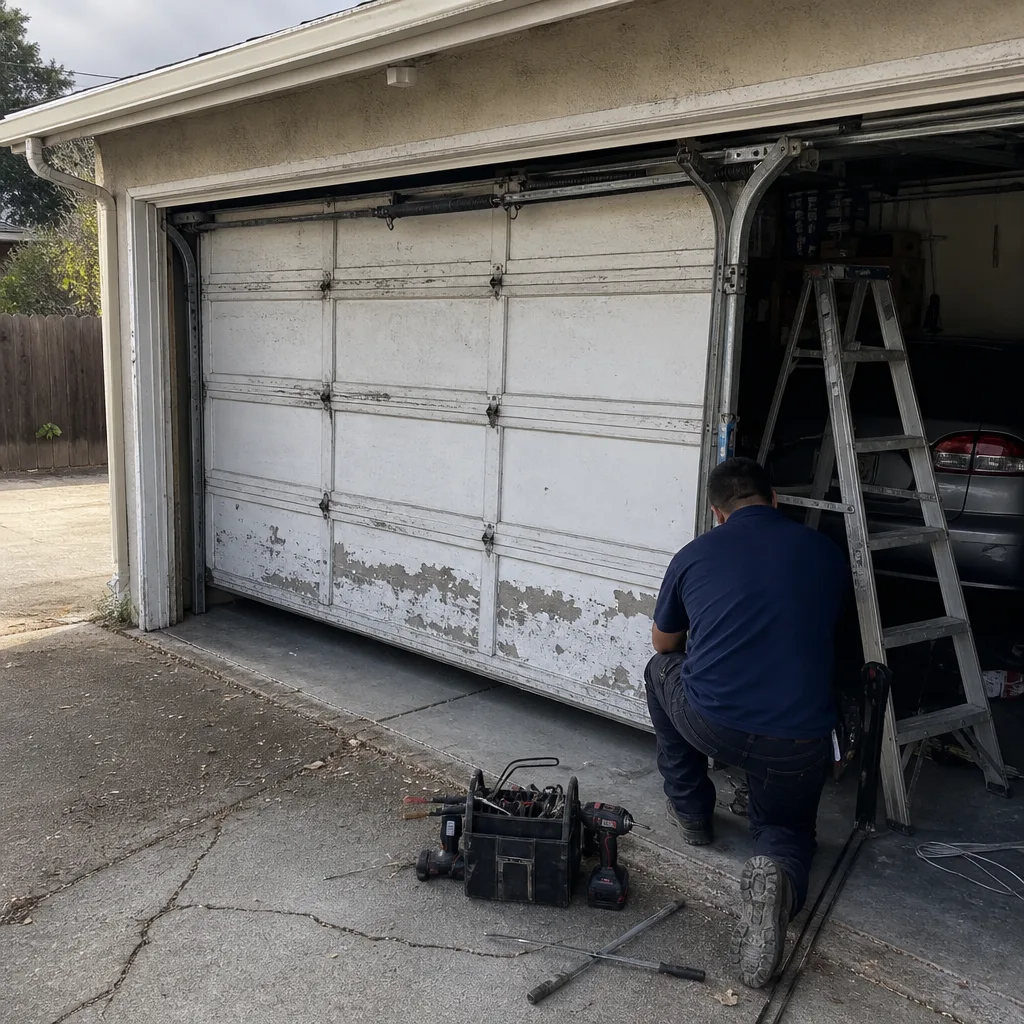 Before
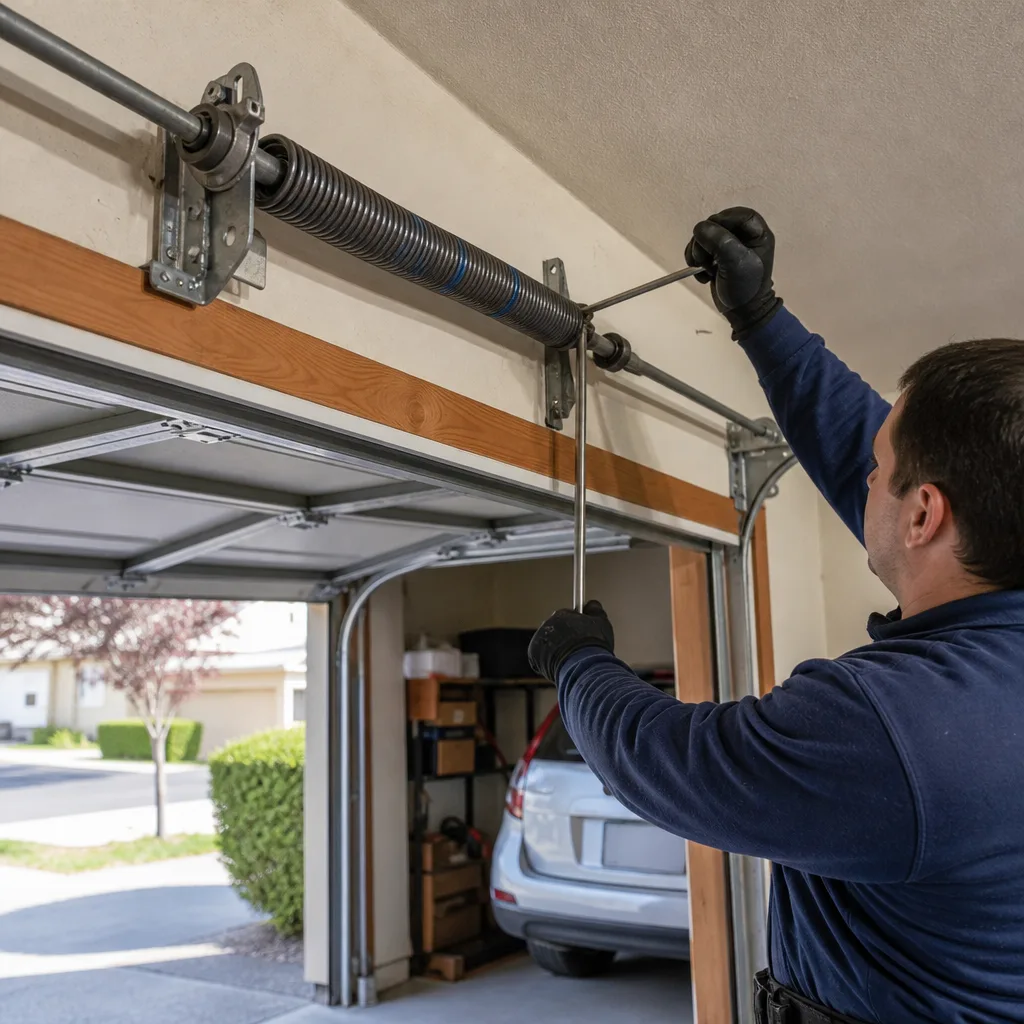 After
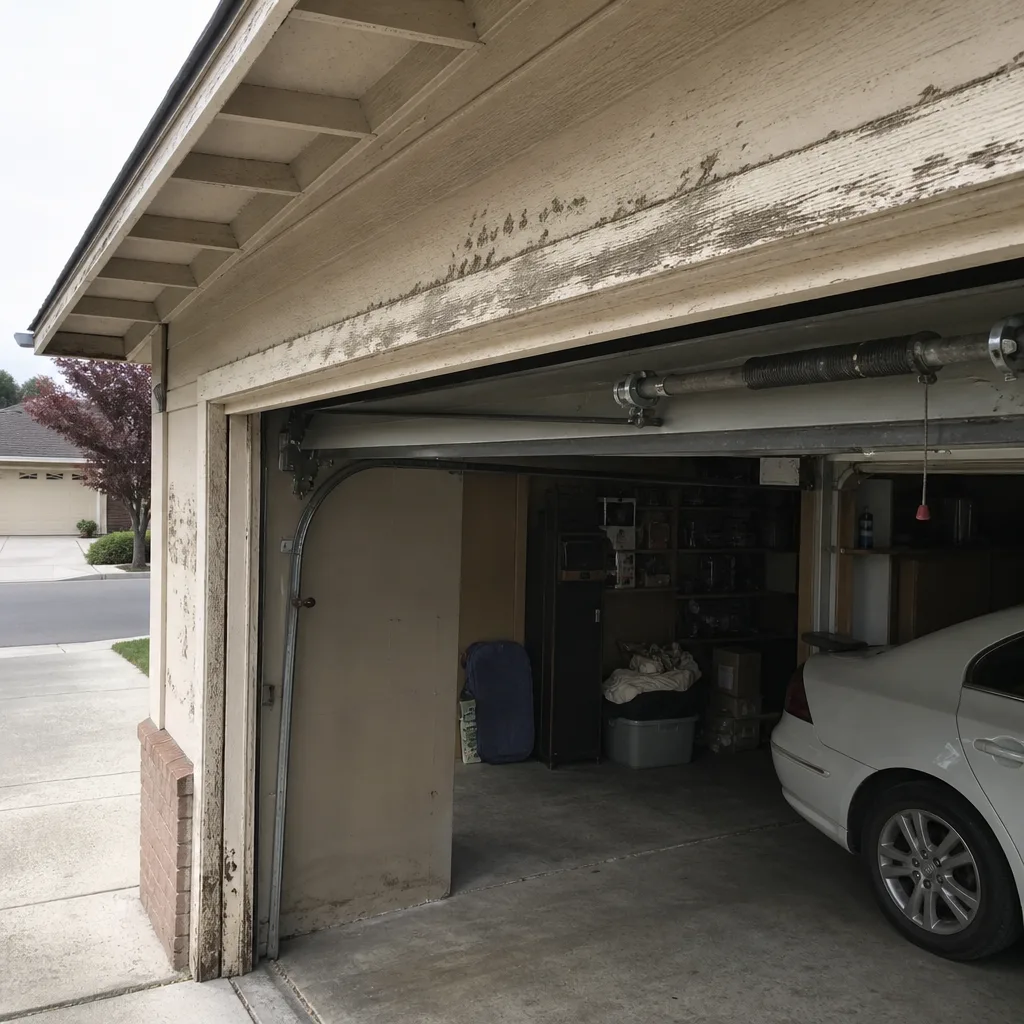 Before
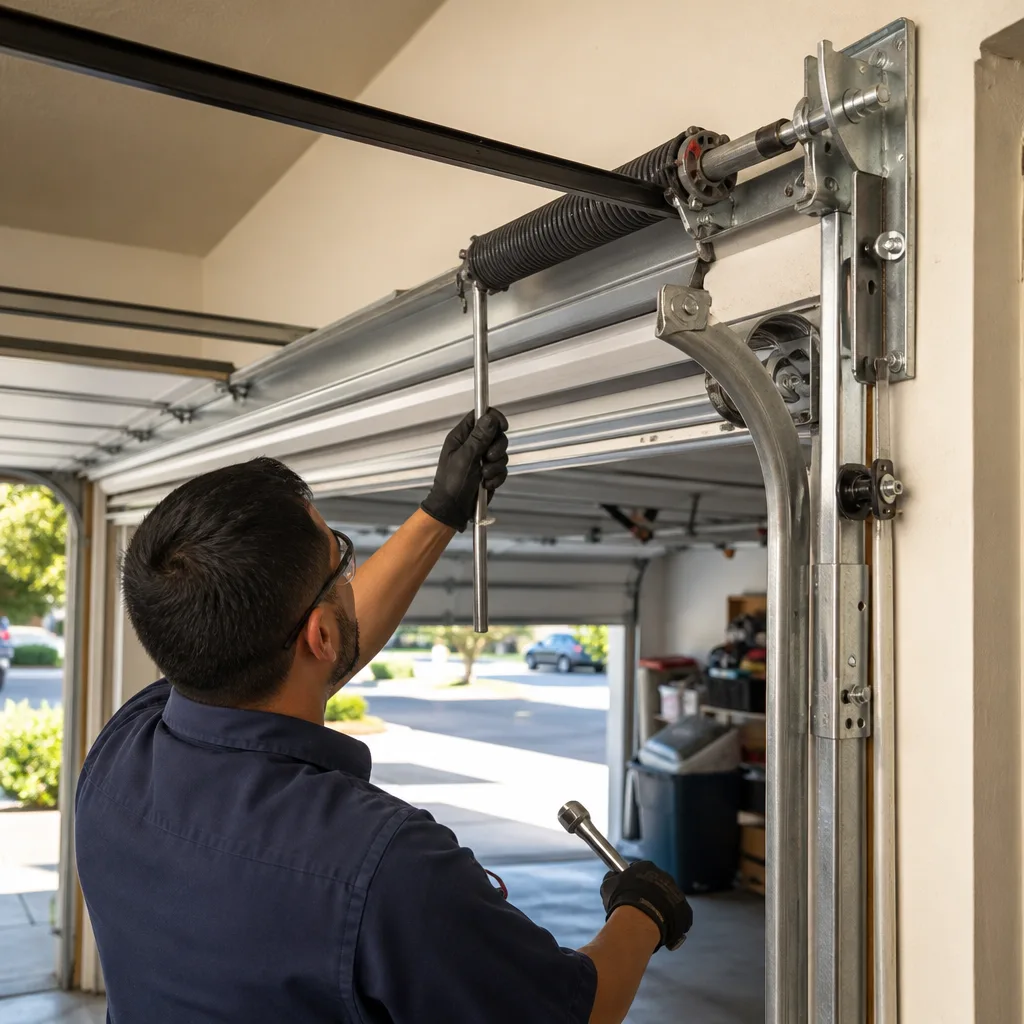 After