
Last updated November 3, 2026
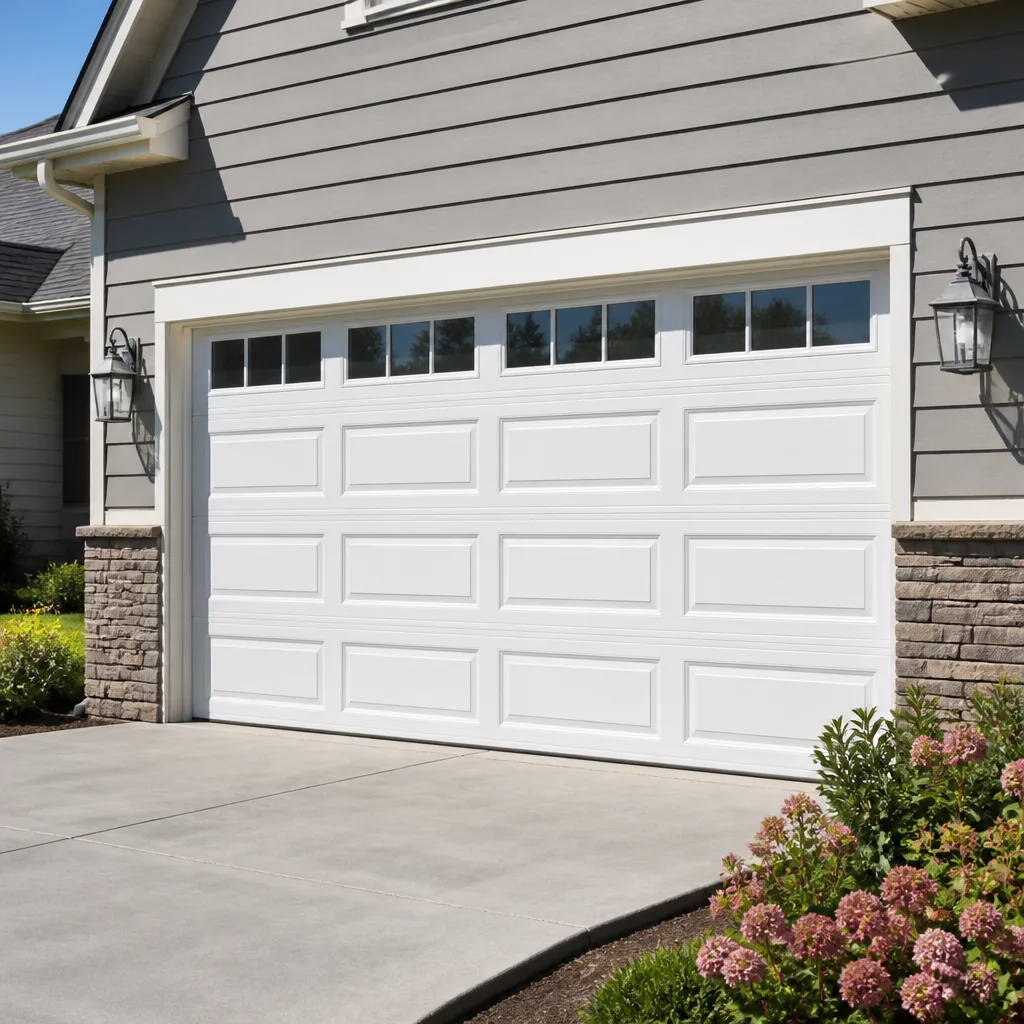 Raised-panel steel
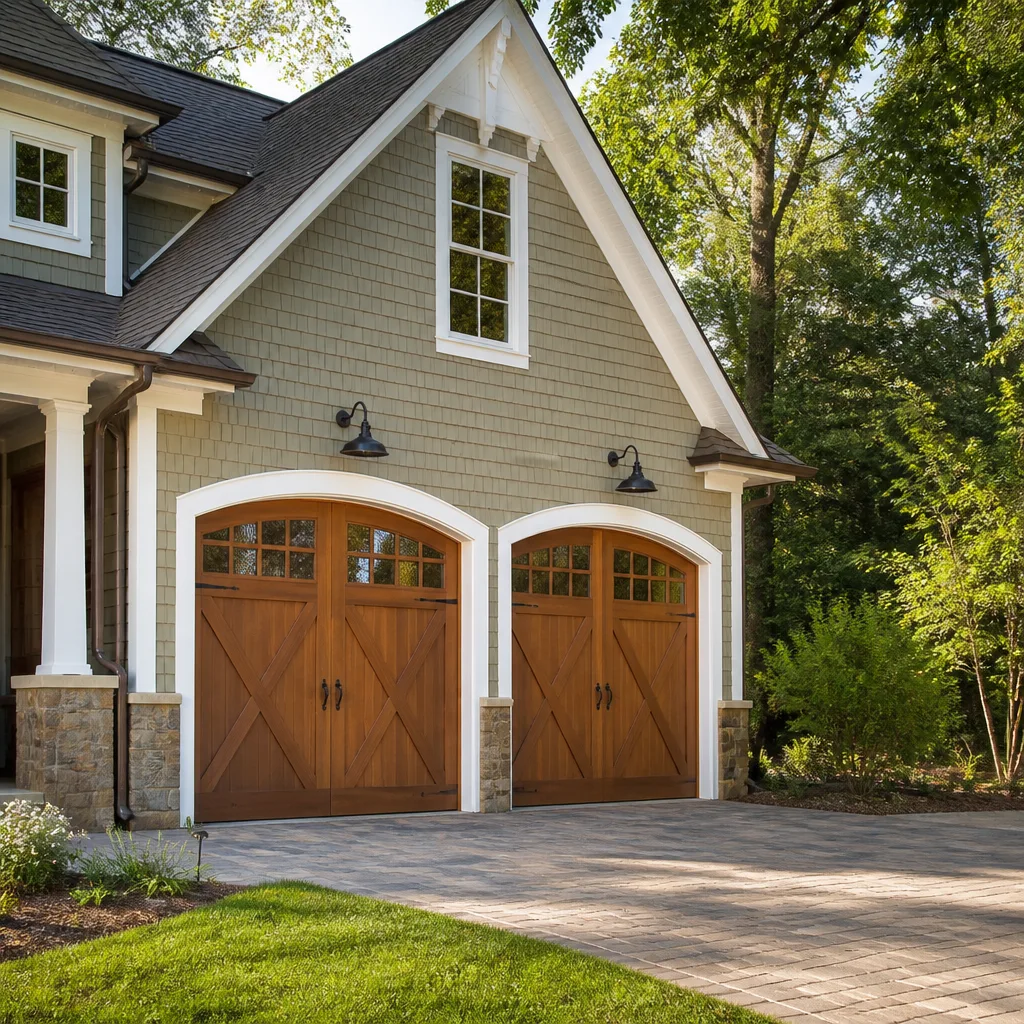 Carriage house
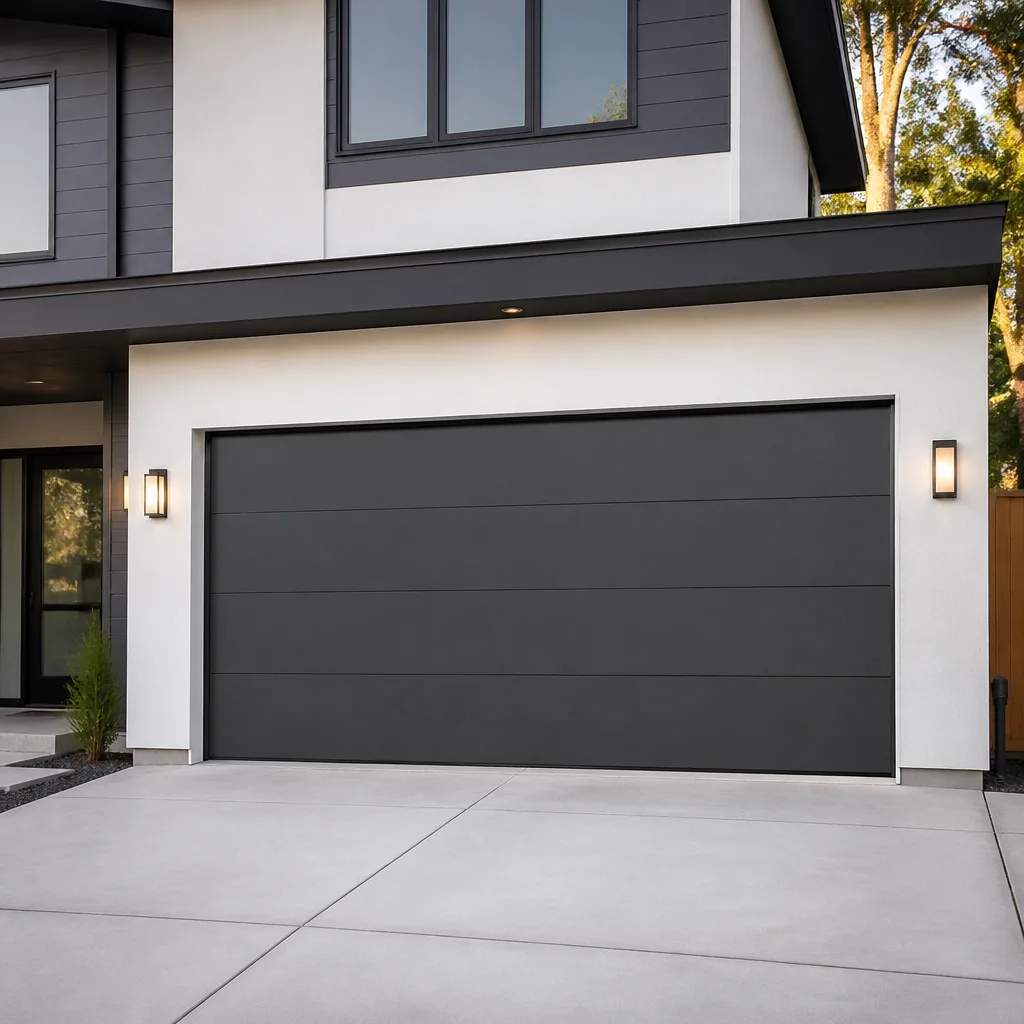 Modern flush
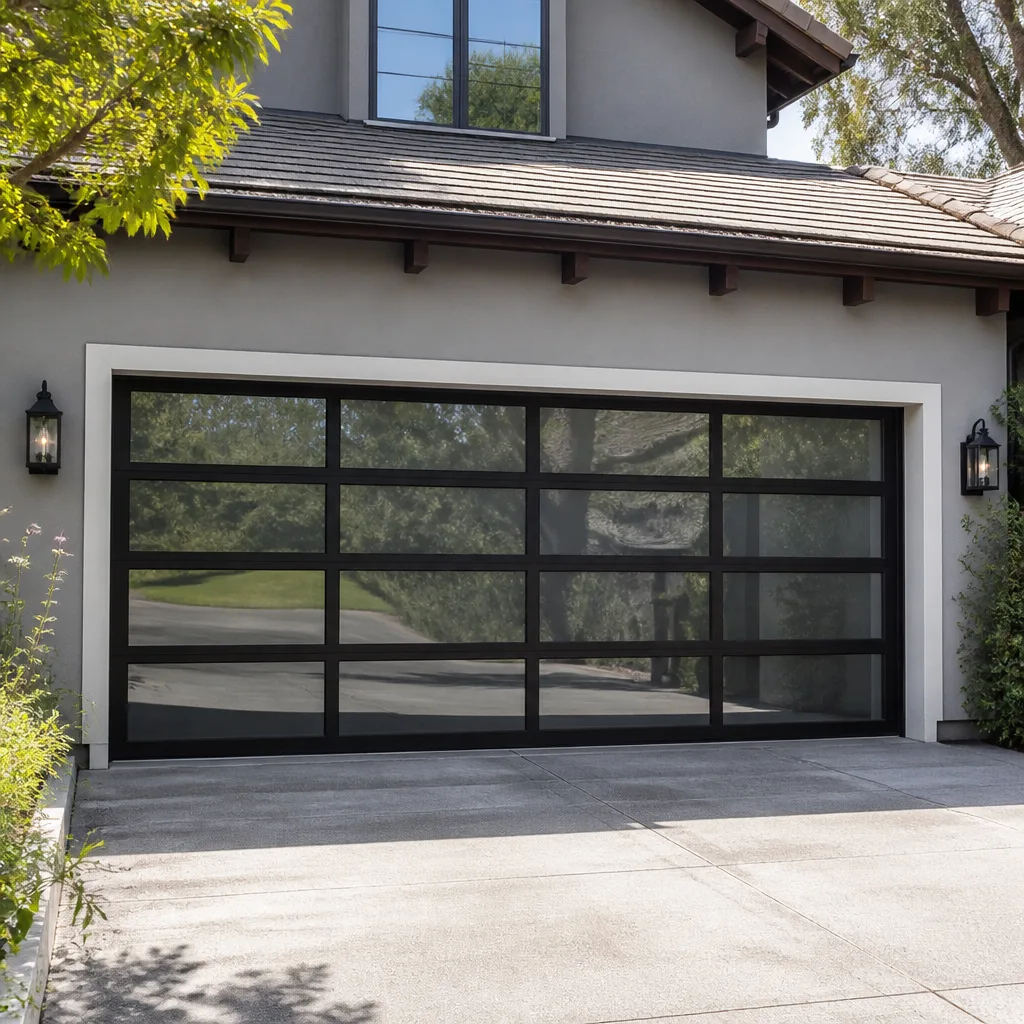 Full-view glass
 LiftMaster openers
 Chamberlain openers
Full 25-point door and opener safety check with every visit - springs, cables, rollers, tracks, and your LiftMaster or Chamberlain opener included
You get a price before we start. It does not change when the truck arrives.
Get your free estimateThe Complete Garage Door Repair Guide for Sunnyvale Homeowners
The average Sunnyvale homeowner calls for garage door service three times before the underlying problem is actually solved. Not because the repairs were wrong, but because no one explained what was connected to what. A spring gets replaced, then the opener strains, then a cable snaps, and each visit feels like bad luck. It isn’t. It’s a system talking to itself, and most homeowners never get the translation. Our Garage Door Repair services and this guide give you that translation. You’ll learn how your door actually works, why Sunnyvale’s specific climate accelerates certain failures, how to read an estimate without getting taken, and when a repair genuinely beats a replacement.
Styles & brands we work with
- Raised-panel steel
- Carriage house
- Modern flush
- Full-view glass
- LiftMaster openers
- Chamberlain openers
Quick Answer
As covered in The Complete Guide to Garage Door in Sunnyvale, repair here typically falls into four categories: spring failure, cable or track misalignment, opener malfunction, and panel or roller wear. Most issues can be diagnosed over the phone and repaired the same day by a technician who works across multiple brands like LiftMaster, Chamberlain, Genie, and Craftsman. The key is understanding how these components interact so a small fix today doesn’t become a three-visit saga.
Table of Contents
- How Your Garage Door System Actually Works
- The Four Root Causes of Most Sunnyvale Garage Door Failures
- How Sunnyvale’s Climate Changes Garage Door Behavior
- Symptoms vs. Systems: Diagnosing Your Door Without Touching It
- Repair or Replace: The Decision Tree
- How to Read a Repair Estimate Line by Line
- Multi-Brand Homes and Why Brand Fluency Matters
- What You Can Safely Do, and What You Should Never Touch
- Common Mistakes to Avoid
- When to Call a Professional
- Frequently Asked Questions
- The Bottom Line
How Your Garage Door System Actually Works
A garage door is a balanced system, not a collection of independent parts. The springs do the heavy lifting. The cables transfer that force. The tracks guide the motion. The opener is just the trigger. When every component is in sync, even a 16-foot steel door moves with one finger. When one component drifts, the others compensate, then fail.
Think of it like this: your springs are rated to lift a specific weight. When they age, they lose tension. The door gets heavier in practical terms, even though its physical weight hasn’t changed. Now your opener, which was never designed to lift the door on its own, starts working harder. It runs hotter. The gears wear faster. The cables, suddenly carrying more load than they should, begin to fray. Six months later, you have three problems that all trace back to one original cause: declining spring tension.
This is the single most important concept in garage door repair, and it’s the thing most homeowners never hear. Fixing the symptom, a burned-out opener motor, without addressing the root cause, a worn spring, means you’ll replace that opener again in half the time it should have lasted. Understanding the system is what keeps repair costs down over the life of the door.
The Four Root Causes of Most Sunnyvale Garage Door Failures
In our experience working across repair, opener replacement, and installation in Sunnyvale, almost every service call comes back to one of four root causes. Everything else is a symptom.
1. Spring Fatigue
Torsion springs and extension springs are both rated for a number of cycles, not a number of years. A standard spring has a lifespan of roughly 10,000 cycles. If your door opens and closes four times a day, that’s about seven years. If you park in the garage and use it as your main entry point, you might hit ten cycles a day and wear a spring out in less than three. Sunnyvale’s mild weather means we don’t get the extreme cold that snaps springs in other climates, but the consistent year-round use takes its toll. Spring replacement is the most common repair we perform, not because springs are poorly made, but because they are intentionally the sacrificial component in the system.
2. Track and Cable Misalignment
Tracks get knocked out of alignment by daily use, by minor impacts (a bike, a ladder, a car bumper), and by the slow settling of concrete slabs. When a track drifts even a quarter inch, the rollers bind, the door jerks, and the cables begin to wear unevenly. We regularly see this in Sunnyvale neighborhoods with older homes where the garage slab has shifted over decades. The fix is usually straightforward: realign the track, reset the roller spacing, and check the cable tension. The mistake is letting it go until a cable snaps or a roller breaks through the track.
3. Opener Drive Wear
Chain, belt, and screw-drive openers all wear, but they wear differently. Chain drives stretch and get noisy. Belt drives wear their internal gears. Screw drives, common on older Genie and Craftsman units, develop play as the screw and carriage wear together. The symptom is almost always the same: the opener runs, but the door doesn’t move smoothly, or it reverses for no reason. Opener repair is often a gear, sprocket, or carriage replacement, not a full motor swap. Brands like LiftMaster and Chamberlain share many internal components, which means a technician who knows the line can often fix an opener in a single visit.
4. Panel and Roller Degradation
Steel panels rust from the inside out in coastal-influenced climates. Sunnyvale’s damp winter air and summer heat spikes accelerate oxidation on panels that have lost their factory coating. Rollers, especially the plastic ones found on lighter doors, chip and crack over time. A broken roller doesn’t stop the door immediately, but it creates resistance, which amplifies every other problem on this list. Replacing rollers before they disintegrate is one of the cheapest insurance policies you can buy for your door.
How Sunnyvale’s Climate Changes Garage Door Behavior
Sunnyvale sits in a specific microclimate band. We’re not coastal like Half Moon Bay, where salt fog dominates. We’re not inland like San Jose, where summer heat is brutal and consistent. We get moderate winters with intermittent damp, and summer stretches where daytime temperatures spike but nights cool quickly. That combination creates specific wear patterns.
The damp winter air means bare steel components, especially springs and cables, develop surface rust faster than they would in a drier climate like Livermore. Surface rust on a spring isn’t an immediate failure, but it creates friction between the coils, which accelerates fatigue. We recommend inspecting springs every fall in Sunnyvale, before the wet season, and addressing surface rust with a light lubricant specifically designed for garage door springs. WD-40 is not that. It displaces water but does not lubricate a torsion spring under load.
Summer heat affects the opener’s electronics more than the mechanical components. Capacitors and circuit boards degrade faster in sustained heat. A garage can reach 100 degrees on a summer afternoon even when outdoor temperatures are in the 80s. If your opener fails in August, it’s often the logic board, not the motor. This is a key distinction because a board replacement on a LiftMaster or Chamberlain opener is a fraction of the cost of a full unit.
The other Sunnyvale-specific factor is concrete movement. Our soil, a mix of clay and loam, expands and contracts with moisture. Garages on slab foundations shift subtly over the years. Slabs tilt, and the track mounts, which are bolted to the floor and the walls, go out of square. A door that was perfectly balanced when installed ten years ago might now be fighting its own track geometry. This is part of the reason why a professional in Sunnyvale can’t just quote a spring replacement over the phone. The entire system has to be observed as it sits now, in your specific garage, on your specific slab.
Symptoms vs. Systems: Diagnosing Your Door Without Touching It
You can learn a lot about your garage door without ever touching a component. Here’s a safe, no-contact diagnostic sequence you can run in under ten minutes. This will help you describe the problem accurately when you call for service, which means the technician arrives with the right parts on the truck.
- Watch the door open and close from the inside. Stand clear of the door path. Does it move smoothly, or does it hesitate, jerk, or bounce? A smooth ride suggests the springs and tracks are doing their job. Jerkiness points to track binding or roller wear.
- Listen for the sound signature. A grinding noise from the opener housing usually means gear wear. A rumbling or rattling from the door itself points to rollers. A sharp bang while the door is moving often means a cable slipped or a roller popped out of the track.
- Check the balance manually (safely). Disconnect the opener using the red emergency release handle, then manually lift the door to waist height and let go. A balanced door stays put. If it drops, the springs are worn. If it rises, the springs are over-tensioned, which is equally dangerous. Both conditions warrant a professional adjustment.
- Inspect the visual gaps. With the door closed, look at the gap between the door and the frame on both sides. A wider gap on one side indicates a track alignment issue or a shifted slab. Look at the spring mounting brackets for any visible movement or cracking in the drywall above the door.
- Test the safety reversal. Place a roll of paper towels in the center of the door opening and close the door. It should reverse immediately on contact. If it doesn’t, the photo-eye sensors need realignment or replacement. This is a safety issue, not a convenience one.
These five observations give a technician in Sunnyvale a clear starting point before they even arrive. They also protect you from vague quotes that get revised upward the moment the technician sees the door.
Repair or Replace: The Decision Tree
The decision between repair and replacement should be economic, not emotional. Here’s the framework we use when advising homeowners in Sunnyvale, and it’s the same framework you can apply before you call anyone.
When to Repair
- Spring replacement on a door under 15 years old. Springs are consumable. Replacing them is maintenance, not failure. It extends the life of the door significantly.
- Opener gear or logic board replacement on an opener under 12 years old. If the rail, motor, and belt or chain are still in good shape, a $150-$300 repair beats an $800-$1,200 replacement. This is true for LiftMaster, Chamberlain, and Genie units, which share many internal parts.
- Cable and track realignment. Tracks don’t wear out; they drift. Realignment, roller replacement, and cable adjustment are routine repairs that restore the system to factory balance.
- Panel replacement on a door where only one or two panels are damaged. If the rest of the door is structurally sound, replacing individual panels is cost-effective. Brand match matters here. Clopay, Amarr, and Wayne Dalton all have specific panel profiles.
When to Replace
- Door over 20 years old with multiple failing components. When the springs, rollers, and panels are all at the end of their service life, replacement is the better financial decision. You’re not fixing a door anymore; you’re rebuilding it piece by piece at labor cost each time.
- Opener over 15 years old with a failed motor. Motor replacement is not a repair; it’s a full unit swap. At that age, the gearbox, drive, and logic board are all on borrowed time.
- Extensive panel rot or rust through. If the steel is compromised structurally, not just cosmetically, new panels on old tracks will still fight the underlying damage.
- Safety upgrade requirements. If you’re buying a home in Sunnyvale with an old door lacking photo-eye sensors or a modern auto-reverse, replacement gets you current safety compliance and new warranty coverage.
The honest truth: a good technician will tell you when a repair is throwing good money after bad. We work on what you already have because repair-first is usually the right economics. But we’ll also tell you plainly when it isn’t.
How to Read a Repair Estimate Line by Line
A repair estimate for a garage door in Sunnyvale should be transparent, itemized, and explained in plain language. Here’s how to decode what you’re looking at, line by line, so you know what’s essential, what’s upsell, and what can wait.
1. Diagnostic Fee. Some companies charge $50-$100 to diagnose, which they waive if you proceed with the repair. Ask before scheduling. We don’t charge a separate diagnostic fee when the repair is completed, but you should know the policy up front.
2. Parts. Every line should name the specific part and the brand. “Spring replacement” is vague. “Two replacement torsion springs, rated 10,000 cycles, for a Clopay 16×7 steel door” is specific. If the estimate doesn’t tell you the brand and rating, ask. A spring rated for 5,000 cycles costs less and lasts half as long. That’s a hidden downgrade in a vague quote.
3. Labor. This should be a flat rate, not hourly, for standard repairs. Hourly billing on a spring replacement or opener gear swap is a red flag. Flat-rate pricing tells you the technician knows exactly how long the job takes and isn’t going to stretch it.
4. Additional materials. Cables, brackets, lubricant, hardware. These should be small line items, not a generic “materials” charge that hides markup. Ask for a breakdown.
5. Disposal or haul-away fees. If old parts need to be removed, especially old springs or an old opener, the fee should be stated. It’s a legitimate charge. It should never be a surprise.
6. Any upsell. This is where you pay attention. “We recommend replacing all four rollers” when two are bad is sometimes legitimate preventive maintenance, sometimes padding. The test: does the technician explain why in terms of system stress, or just add it to the invoice? A straight diagnosis should be able to justify every line item in one sentence. If the explanation sounds rehearsed rather than specific to your door, get a second opinion.
The single most important rule in Sunnyvale, and everywhere else: the price you agree to before work starts is the price you pay when the job is done. If the number changes, the work should stop. No exceptions. A reputable shop quotes the complete job, gets your approval, and honors that number.
Multi-Brand Homes and Why Brand Fluency Matters
The most common garage setup we encounter in Sunnyvale is a mixed system: a Raynor door from the home’s original construction, a Genie opener installed in 2012, and a Craftsman keypad added a few years later. Each brand has its own tolerances, its own mounting patterns, its own failure modes. A technician trained on one brand’s playbook will approach a mixed system with a narrow lens, and that’s where misdiagnoses happen.
For example, LiftMaster openers have a specific travel-limit logic that interacts differently with a heavy Wayne Dalton door than with a lighter Amarr panel. A technician who knows only LiftMaster might misread the reversal as a sensor issue when the real cause is force-limit misconfiguration against the door’s actual weight. The opener is protecting itself, correctly, but the inexperienced eye sees a malfunction.
Brand fluency also matters for parts. Genie and Chamberlain use different rail profiles. Craftsman openers have historically been manufactured by Chamberlain, so many internal components interchange, but the faceplates and programming buttons differ. A technician who knows the crossover points can often repair a Craftsman opener with confidence in the interchange rather than quoting a full replacement because the original parts are discontinued.
This is the practical core of our repair philosophy: Garage Door Repair in Sunnyvale means working on what you already have, not what a sales sheet wants to sell you. When a technician can say, “Your Genie opener is the 7055, I know that board, it fails in this specific way,” you’re paying for expertise that resolves the issue in one visit instead of three.
What You Can Safely Do, and What You Should Never Touch
There is a short list of safe, effective maintenance tasks you can do yourself. There is a longer list of things you should never attempt. Knowing the difference protects your hands, your door, and your wallet.
What You Can Safely Do
- Visual inspection. Look at the springs, cables, rollers, and tracks monthly. Look for rust, fraying, gaps, or obvious misalignment. You’re not touching anything; you’re gathering information.
- Lubricate the rollers and hinges. Use a silicone-based lubricant on the roller bearings and hinge pivot points twice a year. This is a 15-minute job that extends component life.
- Tighten visible bolts. Use a wrench on the track mounting brackets and hinge bolts. A quarter-turn of a loose bolt can prevent a track from drifting out of alignment.
- Clean the photo-eye lenses. A soft cloth and mild cleaner on the sensor lenses fixes a surprising number of “opener won’t close” issues.
What You Should Never Touch
- Never adjust, remove, or lubricate torsion springs. These springs are under hundreds of pounds of stored tension. A failure during adjustment can cause severe injury. This is not a home project. Any repair involving torsion springs requires a trained professional with the correct winding bars and experience.
- Never remove or repair cables under tension. The cables on a garage door carry the spring’s load. Cutting or disconnecting a cable under tension is how people lose fingers. If a cable has snapped, the remaining components are under unpredictable stress.
- Never adjust opener force or travel limits by trial and error. These settings interact with the door’s balance. Over-adjusting force to compensate for a worn spring masks the root cause and creates a safety hazard.
The distinction isn’t about skill; it’s about stored energy. A garage door spring stores enough force to lift a 300-pound door. That’s the same force that will break bone if it releases unexpectedly. The safety rule is simple: if it’s under spring tension, it’s a professional’s job.
Common Mistakes to Avoid
- Repeatedly resetting the opener. If your LiftMaster or Chamberlain opener reverses randomly, erasing and reprogramming the travel limits is a band-aid. The underlying cause is usually a balance issue or a failing force sensor, and every reset just teaches the opener to ignore the problem until it fails completely.
- Lubricating the wrong thing. Spraying WD-40 on springs is the most common home-maintenance mistake we see in Sunnyvale. It strips the existing lubricant and accelerates rust. Use a garage-door-specific silicone or lithium spray, and never on torsion springs themselves; it gets applied to the roller bearings and hinges.
- Ignoring noise. A grinding, scraping, or banging noise is the door telling you something is wrong. Waiting until the door stops working entirely means a small fix becomes a major repair. Noise is a leading indicator, not a nuisance.
- Replacing the opener when the springs are the problem. A burned-out opener motor is often a symptom of a worn spring forcing the opener to do the door’s job. Replace the opener without fixing the spring, and you’ll replace the opener again in a few years.
- Choosing parts by price, not cycle rating. A 5,000-cycle spring costs less than a 10,000-cycle spring, but it lasts half as long. Over ten years, you’ll pay more in labor for the cheaper spring because you’ll be replacing it twice as often. Ask for the cycle rating.
- Hiring a general handyman for spring work. Garage doors are a specific trade with specific failure modes. A generalist who “can probably figure it out” will cost you more than the specialist who sees this exact problem weekly. Commodore Garage Door Repair home exists because this trade rewards deep, narrow expertise.
When to Call a Professional
Call a professional when the problem involves springs, cables, or opener disassembly. Call when the door is stuck in the open position and you can’t secure the house. Call when you’ve done the safe diagnostic steps and the answer still isn’t clear. And call before a small problem becomes a door that won’t open when you’re trying to leave for work on a Tuesday morning.
In Sunnyvale, you have options. Garage Door Opener Repair in Sunnyvale is our specialty, along with full door repair and installation. Commodore Garage Door Repair offers free estimates in Sunnyvale – call (877) 358-3130 and describe what you’re seeing. We’ll tell you honestly whether it needs a same-day visit or can wait until the weekend.
Frequently Asked Questions
Typical Sunnyvale garage door repairs range from $150 for basic roller or cable adjustments to $300-$450 for spring replacement, and $150-$350 for opener gear or circuit board repairs. The specific number depends on your door’s brand, weight, and condition. Call (877) 358-3130 for an exact quote – estimates are free, and the price is agreed before any work starts.
In most cases, yes. We run same-day service and fast dispatch from 7am to 7pm throughout Sunnyvale for spring failures, stuck doors, and safety issues. If the repair is non-emergency, we’ll schedule the earliest available window that works for you, often next day.
No. The price quoted over the phone covers the repair as described, and the technician confirms it with you in person before any work begins. If the on-site inspection reveals additional issues, the new work is quoted separately with a new approval. The original agreed price never changes unilaterally.
We stock springs, cables, rollers, gears, and logic boards for LiftMaster, Chamberlain, Genie, Craftsman, Raynor, and the other major door and opener brands we service. For most common repairs, the parts are on the truck. Unusual panel replacements on older Raynor or Wayne Dalton doors may require a parts order with a defined lead time.
Yes. We work across all major brands, not just one manufacturer’s line. Your Genie opener and Clopay door are systems we know well, and we diagnose both as an integrated unit rather than treating the opener and the door as separate problems.
If the door’s panels are structurally sound and the springs are the only problem, repair is the better value. If the panels are rusting through, the tracks are out of square due to slab movement, and the opener is also failing, replacement is the economically honest answer. Garage Door Installation in Sunnyvale is a service we provide when the math makes replacement the right call, and we’ll tell you which side of that line your door falls on.
The Bottom Line
Your garage door is a system, not a collection of parts. Most repeated failures in Sunnyvale trace back to spring fatigue, track drift, or opener wear that was treated as a symptom instead of a root cause. By understanding how the components interact, you can make better repair decisions, read estimates with confidence, and avoid the three-visit cycle that drains money and patience. See more guides & resources for deeper maintenance and troubleshooting help. A repair-first approach with a technician who knows your specific brands, LiftMaster, Chamberlain, Genie, Raynor, and the rest, gets your door back to balanced operation in one visit. That’s the standard you should expect from any professional you invite onto your property.
Contact Commodore Garage Door Repair for your free Sunnyvale estimate: (877) 358-3130. We’ll explain what’s wrong, what it costs, and what can wait.
Written by the team at Commodore Garage Door Repair, serving Sunnyvale since 2015.
See the difference
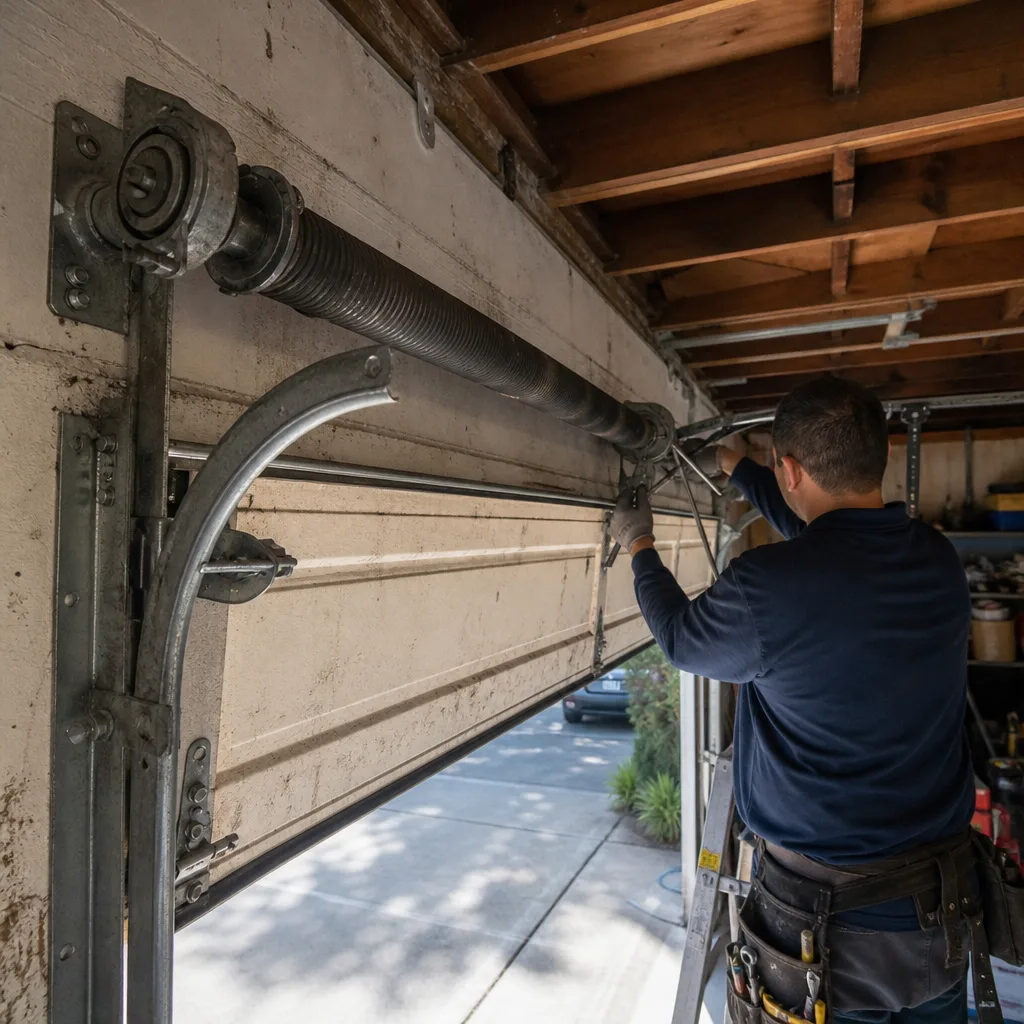 Before
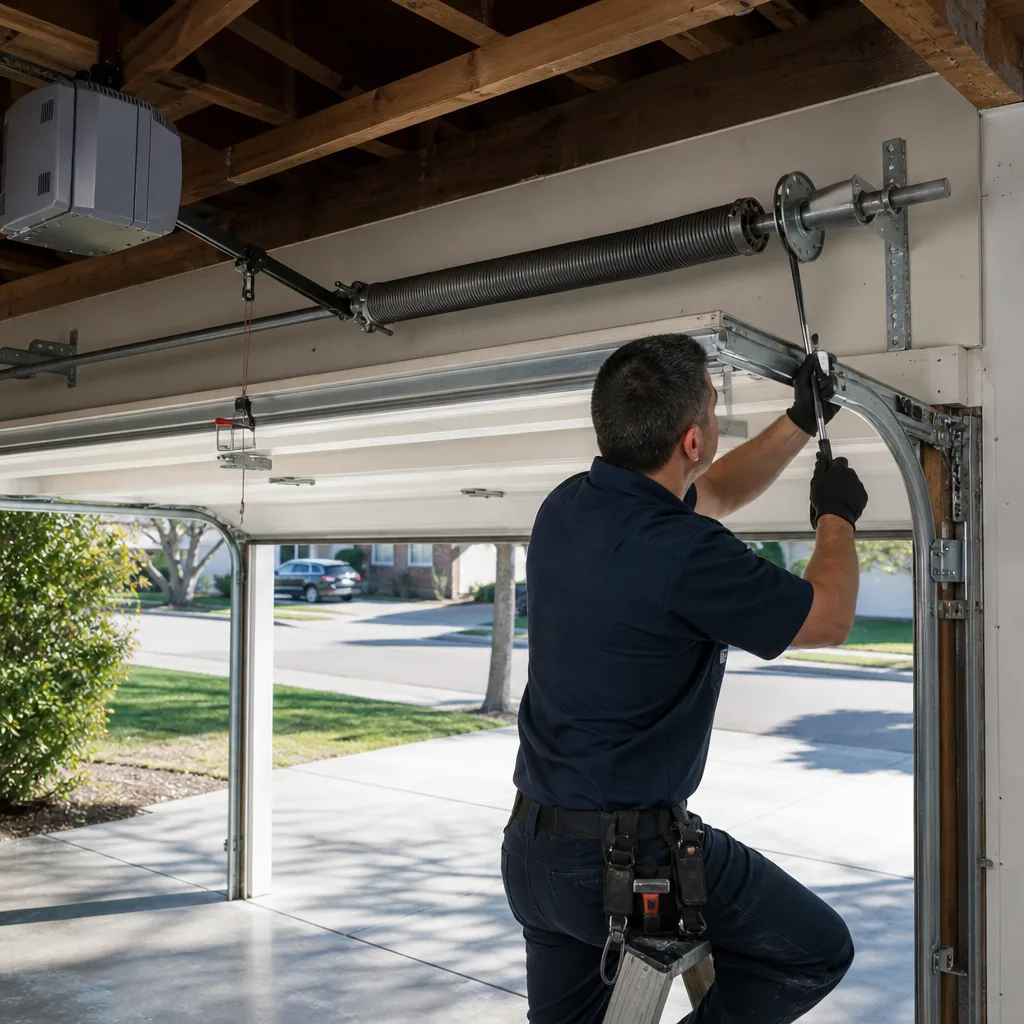 After
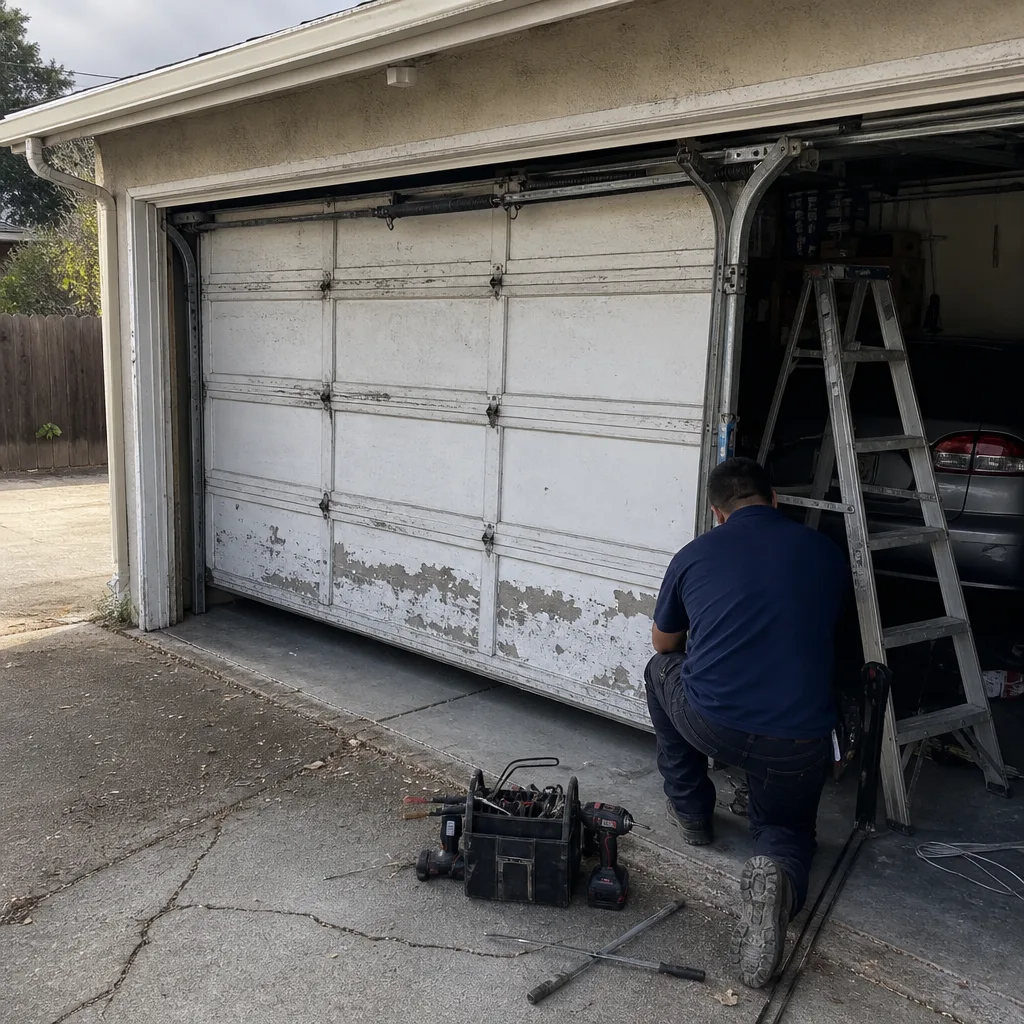 Before
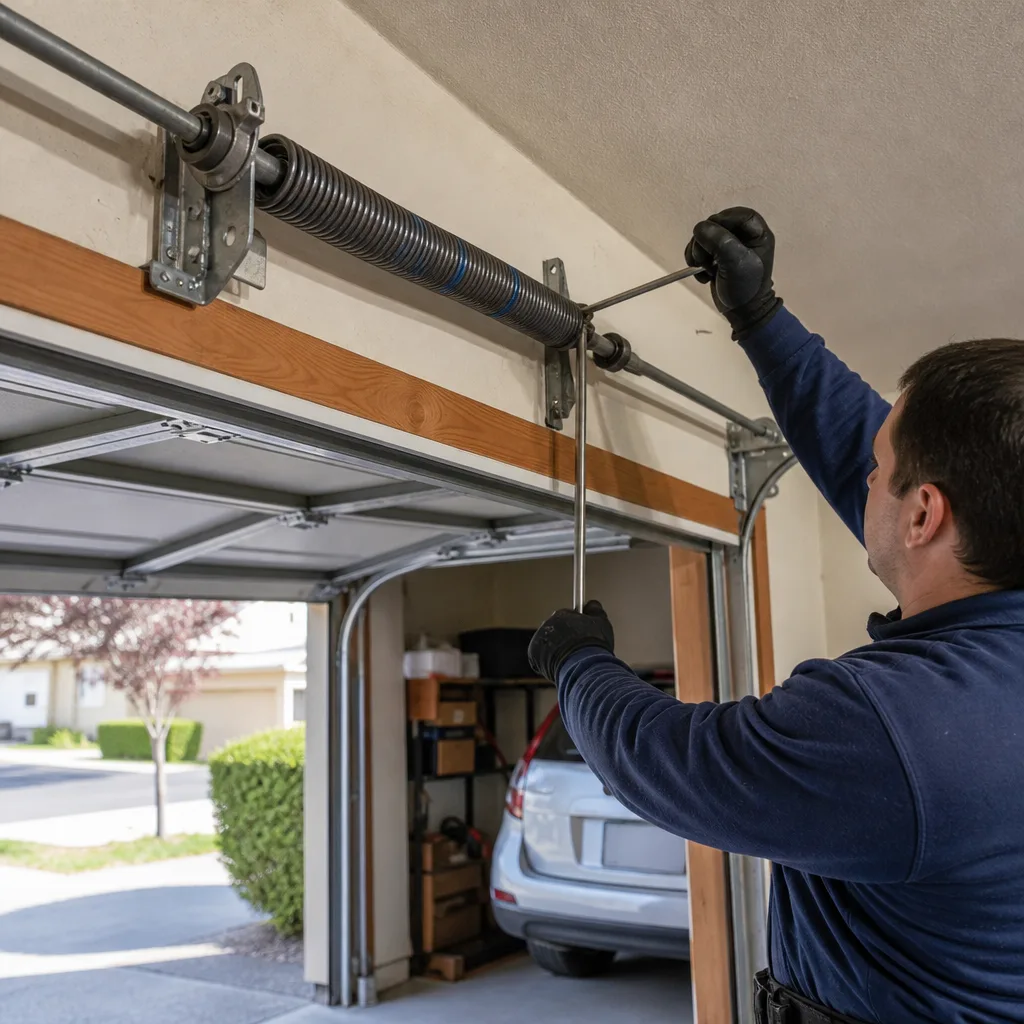 After
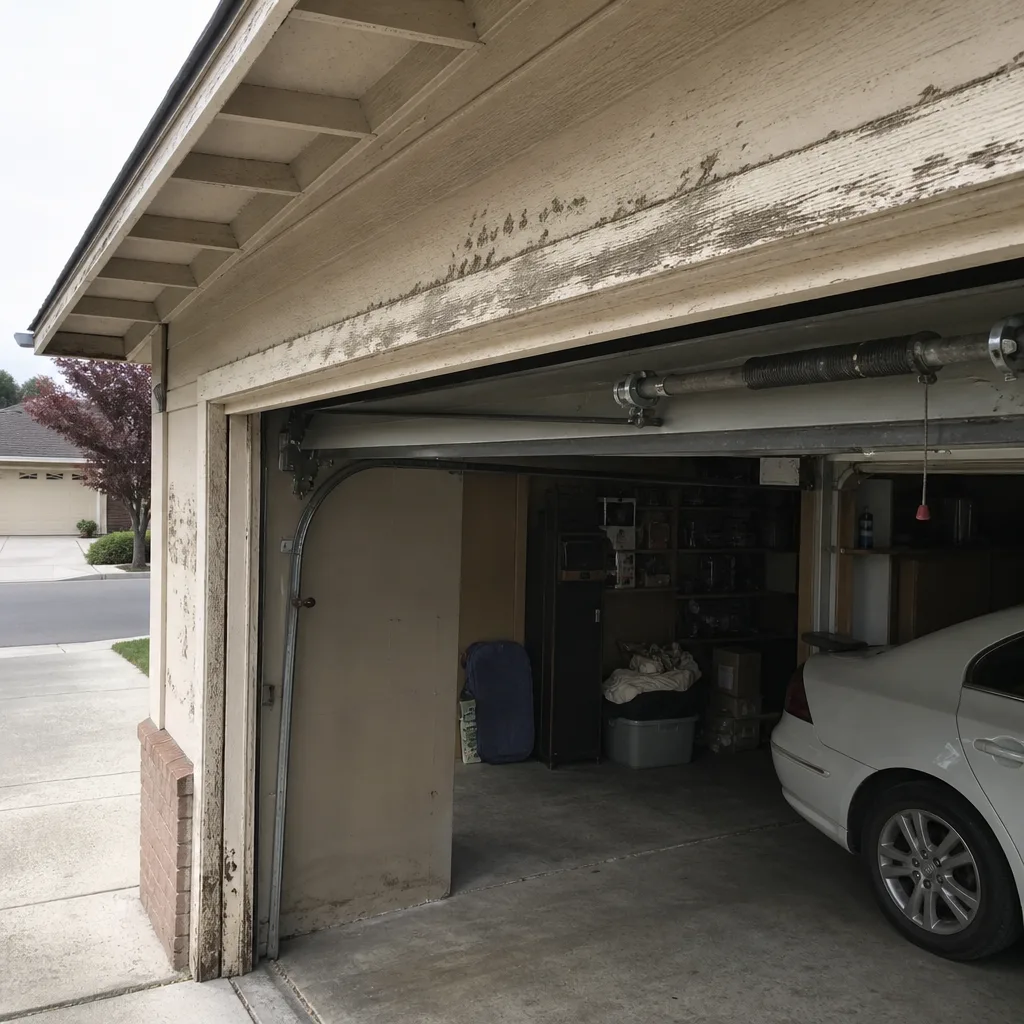 Before
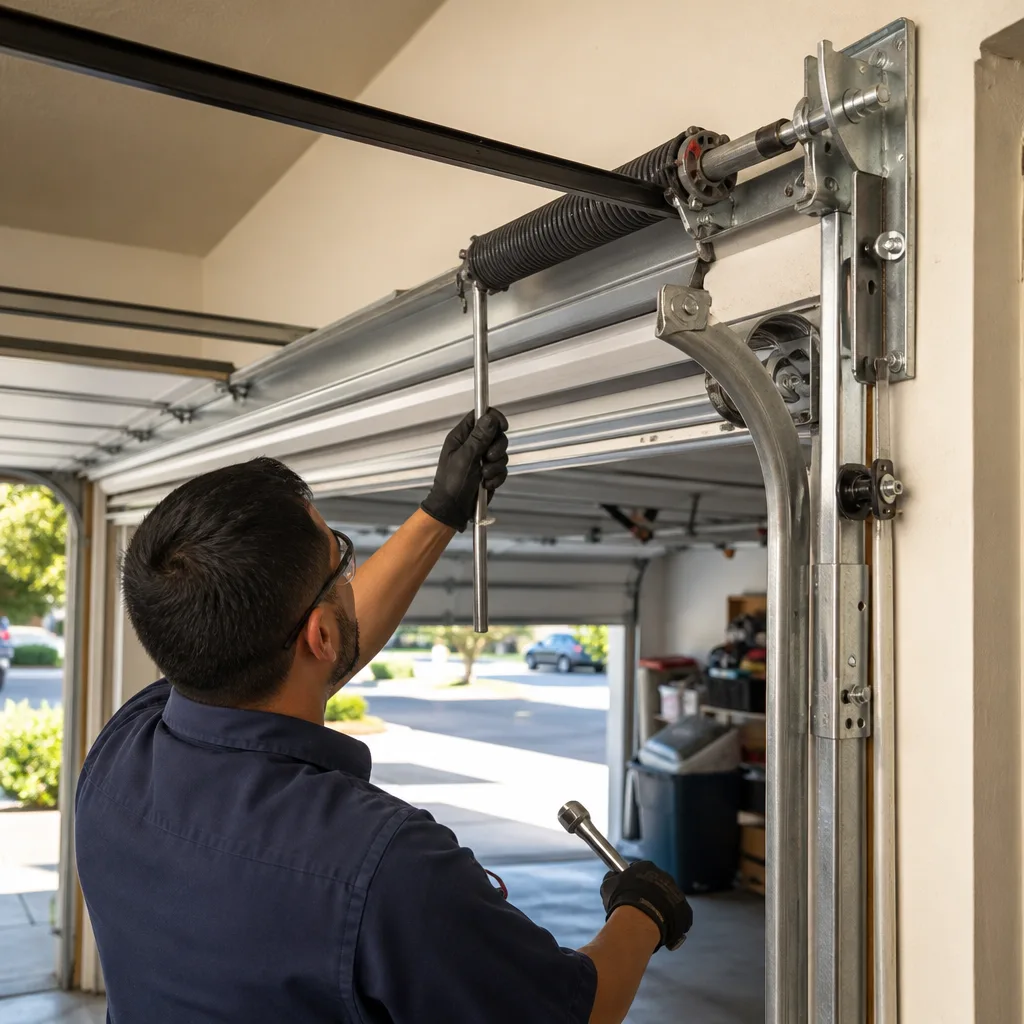 After